12/21/2006

Festooned With Epiphytes


We've flown up to the North Island, where we are experiencing post-partum Antarctic depression in a rented beach house in a place called Opotiki. Just over a low row of dunes, massive surf crashes onto an endless, driftwood strewn beach devoid of humanity. Kelp gulls cruise above the churning salty waves and dusty black oystercatchers patrol the sand, screaming in outrage when they feel you approach too close to their nests. Our friend Helen, who is spending her first season in Antarctica cooking for 1100 people at McMurdo Station, built this house with her ex-boyfriend Grant, before fleeing to the ice. He turns out to be a great guy, she's a great woman, and they spent four happy years together living in a shack amongst avocado trees while building the beach house; there must be a sad story in there somewhere that neither of them have told me yet. In any event, things are still cozy enough between them that she hooked us up to stay in her delightful former beach bungalow, a simple and tasteful three bedroom modern a stone's throw from the beach.

Grant the jungle guide

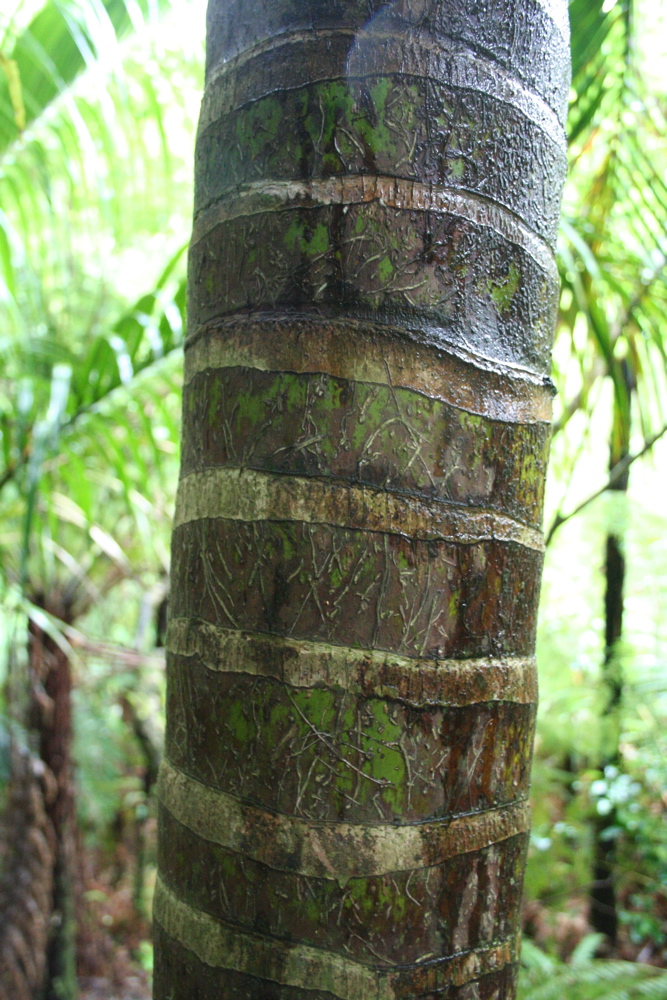
Endemic palm which makes its tree-rings on the outside, one per year
Moist and Green and Squelchy


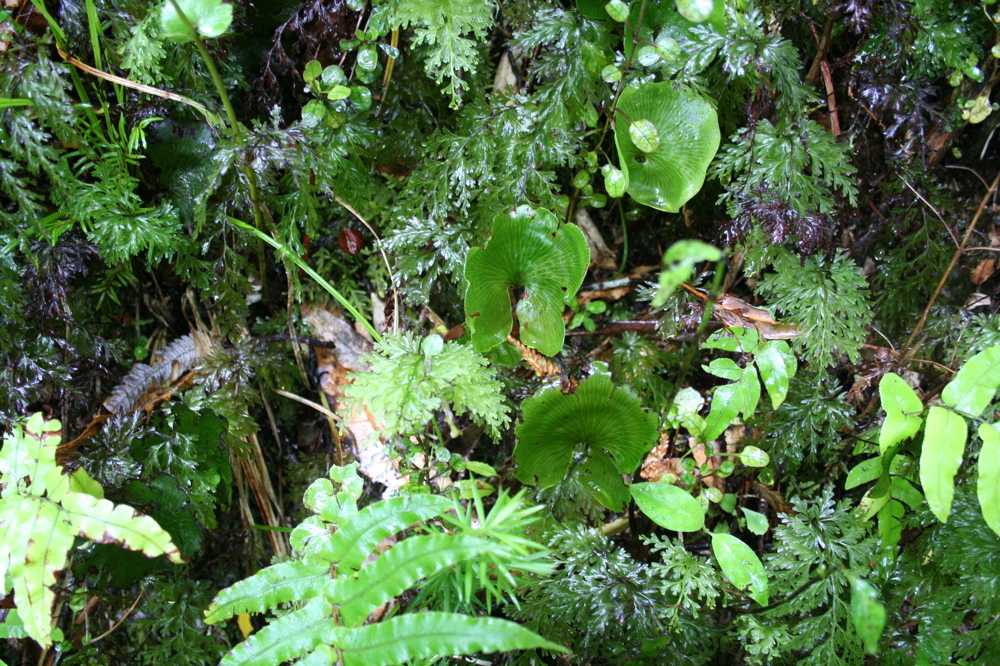
Our goal is to decompress and also film some lush, wet landscapes of the sort that one dreams of when trapped in the piercingly dry, frosty and plantless wilds of Antarctica. With this in mind we spent the day tramping around Grant's avocado orchard and then driving up Motu Rd. into a rainforest reserve clogged with dripping green fern trees and jungle palms, their trunks matted and clotted with thick layers of epiphytic waterlogged mosses, vines and growths of every description. As anyone who knows me well can attest, these are the sorts of environments that I spend all my hard-earned ducats and leisure time flying off to experience "between jobs," so getting paid to tramp about in these claustrophobic green cathedrals of the New Zealand forest is essentially a dream come true. I recorded rain gusting down onto the leaves, bellbirds singing their watery, flute-like song, packs of grey warblers marauding through the bush, waterfalls, and the raging torrent of the Tiwaiti stream coursing through the Urutawa forest. I saw life birds number 2576, 2577 and 2578 today, all in the course of completing my duties. For those of you rubes who are totally out of it, "life bird" means "first sighting ever of that species by me in my lifetime," meaning as of today, since I first caught the ornithological cancer in December of 1976, I've seen 2578 species of birds, worldwide. But who's counting? (For the record, today's birds were Tomtit, Tui, and Weka, all endemic to New Zealand, where many of the birds retain their original Maori names). I realize I may lose some of you if antarcticiana morphs into a birding blog, but at the moment we are struggling to understand our place in the world, now that we have left the ice and are back in it.

I've been practicing my pornographic photography techniques
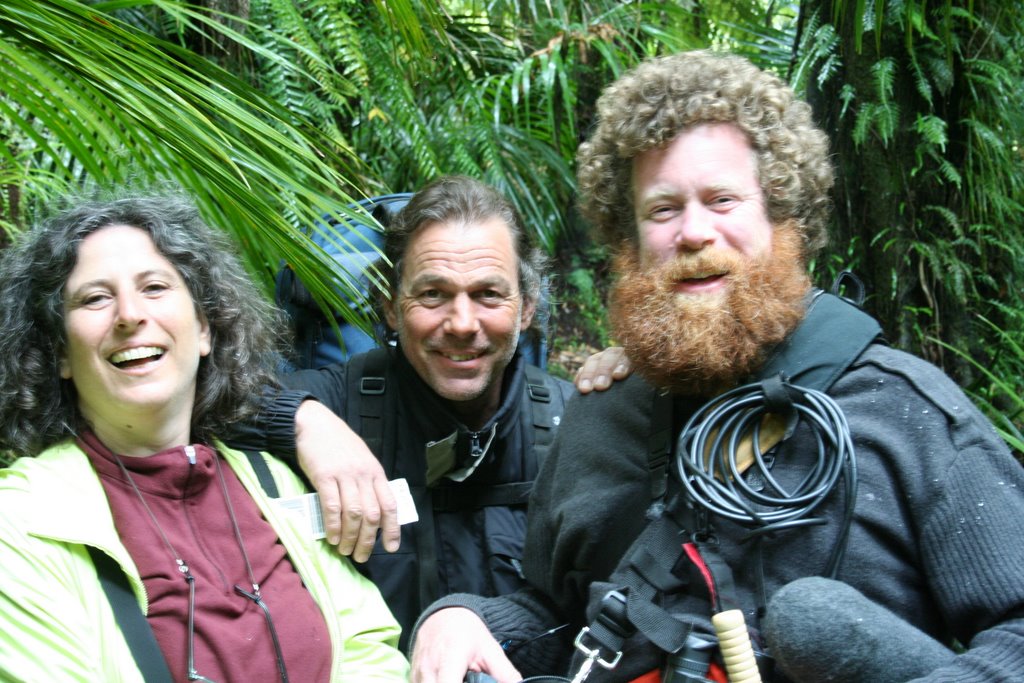
The director, "hungryman" and "hairyman," in the heart of darkness

12/16/2006

It smells like we're not in Kansas any more...


This morning, while sitting beside a pond carpeted green with lily pads, a trio of fresh, downy ducklings motoring happily across the tranquil water, I felt a sharp pain in my left hand. Looking down, I found a mosquito there, latched on and sucking blood out of me like a miniature oil derrick. I was stunned to see it, and It was a long moment before human instinct surged up, dredged from my distant pre-ice life, and I swatted the insect into a black smear along the length of my finger. We are back in the world again.


Many were the ice-people who told us that one of the most remarkable things about getting off of Antarctica was the diversity and abundance of the smells. Phil claims to distinguish by scent between a dozen varieties of grasses whose odors he detects wafting on the breeze, all in the few steps between descending from the stairway of the C-17 and the rush across the tarmac through the glass terminal doors towards New Zealand immigration. I wanted this experience of heightened sensitivity, but I smelled nothing on my way back into New Zealand except the acrid blast of jet-fuel, soon followed by a cloying cloud of manufactured scent hovering about the vicinity of the duty-free shop. It was only when, after having declared a few teabags and stray granola bars, I cleared customs and was charging across the parking lot, luggage cart swaying with a load of never-again-to-be-worn (by me) Extreme Cold Weather gear, that the scent of blossoms and juniper smashed me in the face like a squash racquet. I stopped and sniffed the air like a bloodhound, only to be almost rear-ended by another luggage cart hurtling headlong towards the Clothing Distribution Center to return its cargo. No time for stopping and smelling the flowers. I was unsure. Was I passing a particularly fragrant bush? Or were my senses really more acute?


Inside the CDC the orderly piles of twin orange bags that had greeted us on our departure were nowhere to be seen. Instead the unwashed filthy fabric of countless Antarctic voyagers was piled into great stinky mountains on the floor. Men in blue coveralls with clipboards wandered the crowd. I unzipped my orange bags and yes, then I smelled it! Months of funk, perspiration and the bitter captured fumes of Coleman stove exhaust. Dueling bags of reek. Finally I corralled one of the uniformed clothes-handlers and he read out from his list the items I had been loaned upon leaving so very long ago, in August. The manky remnants of my issue, short one pair of gloves and a fleece aviator's cap, joined the growing pile. I said goodbye to my Big Red, the world's warmest coat.


In the city, I smelled little. Certainly the breeze was balmy and it was thrilling to feel a wind that did not inspire an immediate bulking up of layers, a cinching of hoods and a pulling on of gloves. But I had been led to believe that my reinvigorated nose, unused for so long, would be able to detect and isolate a waft of fresh-cut pandanus leaf blown all the way from Tonga. Or identify a dozen cuts of sushi as to species in the brief moment it took to walk past a Japanese restaurant. Know from its fragrance that the bottle of wine uncorked three tables away was an organic Grunerveltliner, vintage '98.


I went to the "aromatic" plantation in the Christchurch Botanical Gardens. I am a big fan of Botanical Gardens. They are the last surviving manifestation of the "Cabinet of Curiosities" and the Victorian mania for cataloguing, collecting and displaying the natural world. All of which, of course, was a subset of the "Heroic age of Exploration" of Scott, Shackleton, Amundsen and all the other arctic explorers, orchid-fanciers, egg-blowers, phrenologists and kiwi stuffers. Christchurch has magnificent botanical gardens, with an epic greenhouse in bombastic Victorian style, like that of Kew, orgiastic rose plantations, exotica, gravel paths and lily ponds. I sniffed the air, still unsure whether months on the ice, where everything is chilled down below the olfactory threshold, had intensified my sense. Rose, and jasmine and pine filtered in through my nostrils. Fresh turned earth and musty willow. Amazing scents, which I appreciated as if for the first time. It didn't matter, I realized, whether my sense of smell had improved or not--never before had I concentrated so hard on sniffing, so badly did I want to believe that I had been deprived, and in that deprivation strengthened. I wandered from rose to rose, thrusting my nose in and imagining that I detected subtle differences in their bouquets.

12/14/2006

Is there anything to do in the "real" world other than shop?

Yesterday at 10:15 AM we loaded onto the now-famous "Ivan the Terra-Bus" and shuttled out to the Pegasus blue-ice runway, where we had touched down almost exactly four months ago. After about an hour of milling around on the ice under bright blue skies and a straining sun someone spotted the inbound C-17 off in the northern sky and we all trooped around the pallets of cargo like mutton, trying to get a view. Only one forklift was available to unload their cargo and then reload ours, so it was another two hours of standing on the ice, a herd of enormous red parkas, before we were finally able to collect our last McMurdo sack lunches and clamber aboard, wearing our bulky ECW boots for the last time. An uneventful 4 hours and 45 minutes later we were landing in New Zealand.

Christchurch appears to be a riot of commerce; After checking in to our hotel I wandered down Colombo St. looking for a late night snack, turning back about where the shopping district gives way to cut-rate electronics stores, Khmer noodles shops and lingerie parlors hawking garish Christmas panty-sets. This morning banks are bustling, there is traffic in the streets and suddenly I am back in civilization. I'm off to the botanical gardens to smell the flowers.

12/12/2006

Shackleton Sat Here

I don't have time to do justice to our fabulous final jaunt here in Antarctica; we have been scrambling for days to get out of McMurdo. Packing cameras for cargo flight, boxing up videotapes, doing laundry, returning mountains of camping gear and uneaten granola bars, and trying to prepare psychologically for our departure tomorrow have left little time to write about Cape Royds. The best I can manage at the moment is a photo essay.

Where's my nest?

How deep is that crevasse, do you think?

Doing the "Egg Roll"

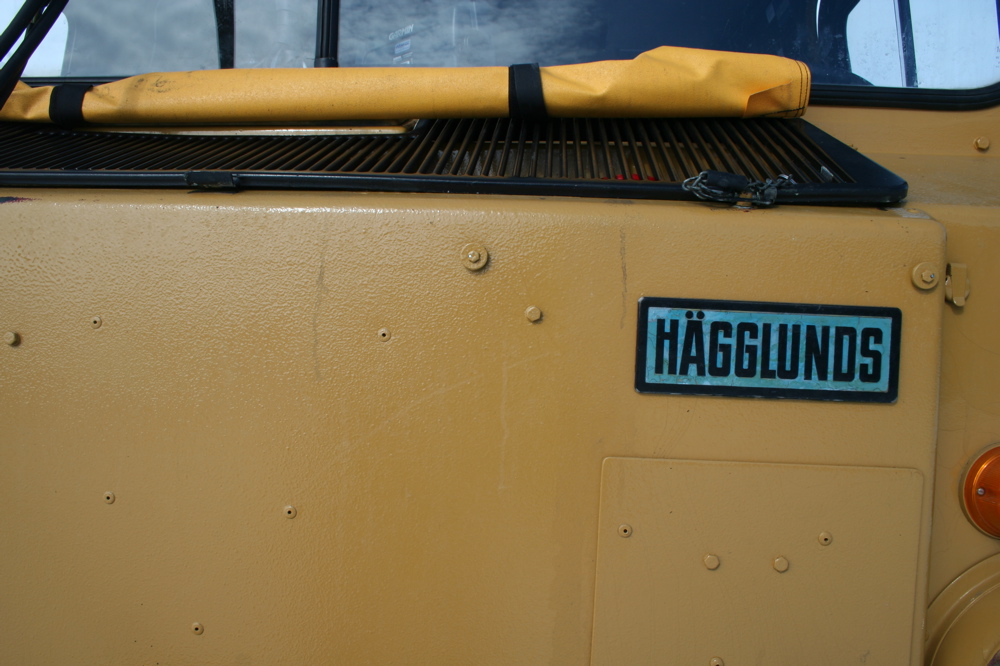
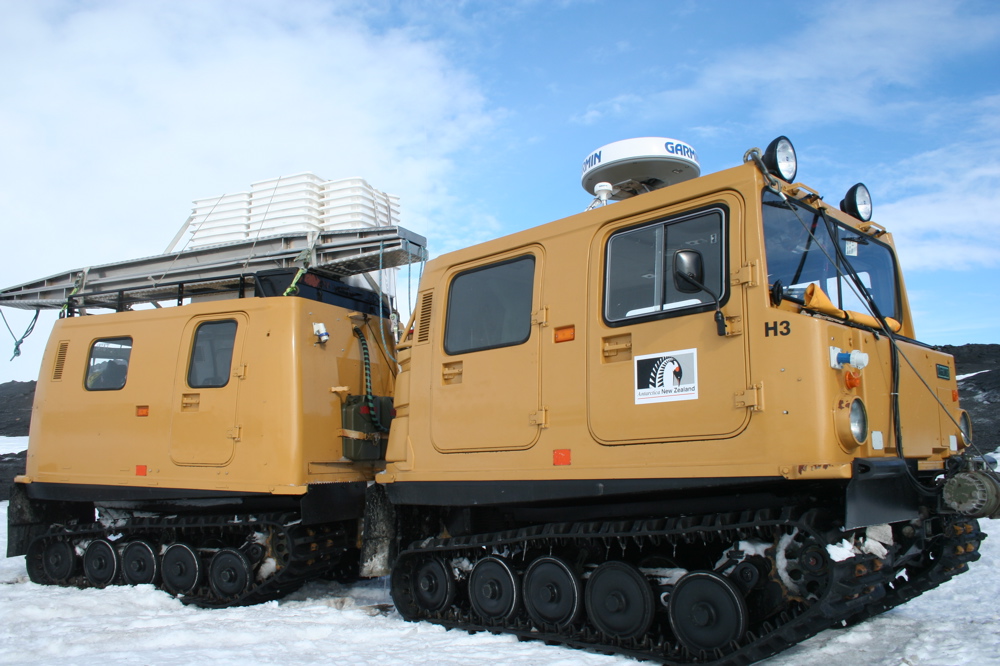
Allan Ashworth, Kelly Gorz, Andrew Podoll and Anne, Sylvestre and I flew out to Cape Royds on Monday to film the geology party on a day of R and R, visiting Ernest Shackleton's hut there. Shackleton and his men set up camp in the midst of an Adelie penguin colony, thereby assuring themselves a plentiful blubber hunt. The colony still thrives, despite those depredations. Before we began filming we walked up to view the penguins and have a look around, and in the meanwhile another film crew arrived. If you are expecting Brad Pitt to show up at the opening of his latest movie in New York it is not surprise to find a bunch of other camera crews on the scene, but it was rather a shock to come upon the competition in the wilds of Antarctica. They had arrived from the Kiwi's Scott Base, in a Hagglunds, a vehicle rather like a Pisten Bully dragging a passenger car, which has the advantage of floating if it falls through the ice. I approached the sound man, here pictured on the right, just behind the camera. "Fantastic," I said. "Amazing; the only other soundman in all of Antarctica! Fancy us meeting this way." To which he had absolutely nothing to say. Not the merest chuckle. A couple of Germans so humorless as to have apparently gotten on board the Hagglunds at central casting.

Excuse me, we were here first. Please wait your turn behind the other film crews.


The Kiwi Hagglunds from: Vehicles of McMurdo

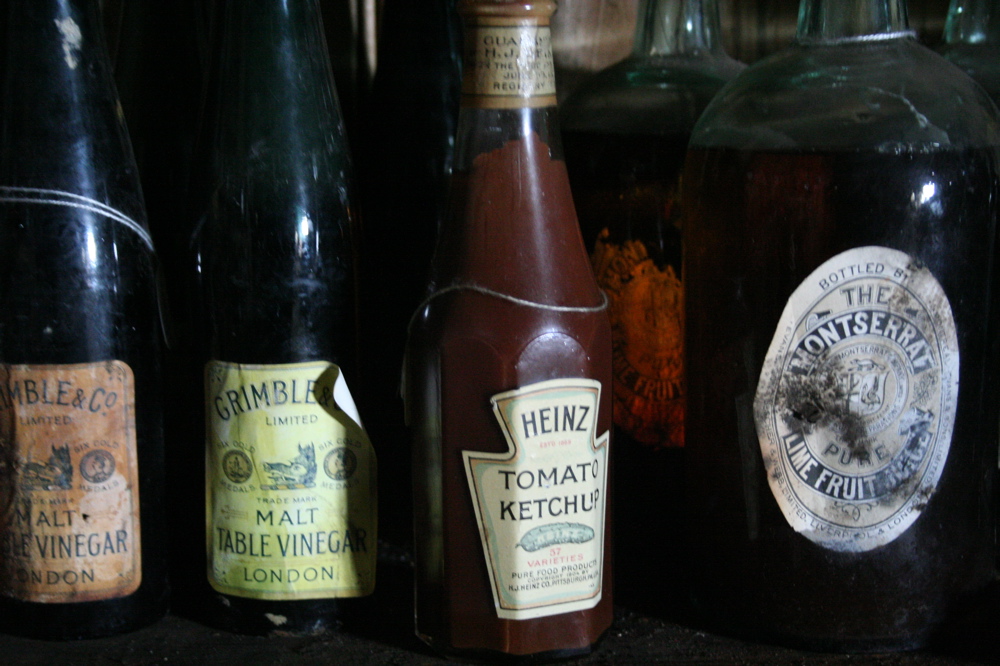
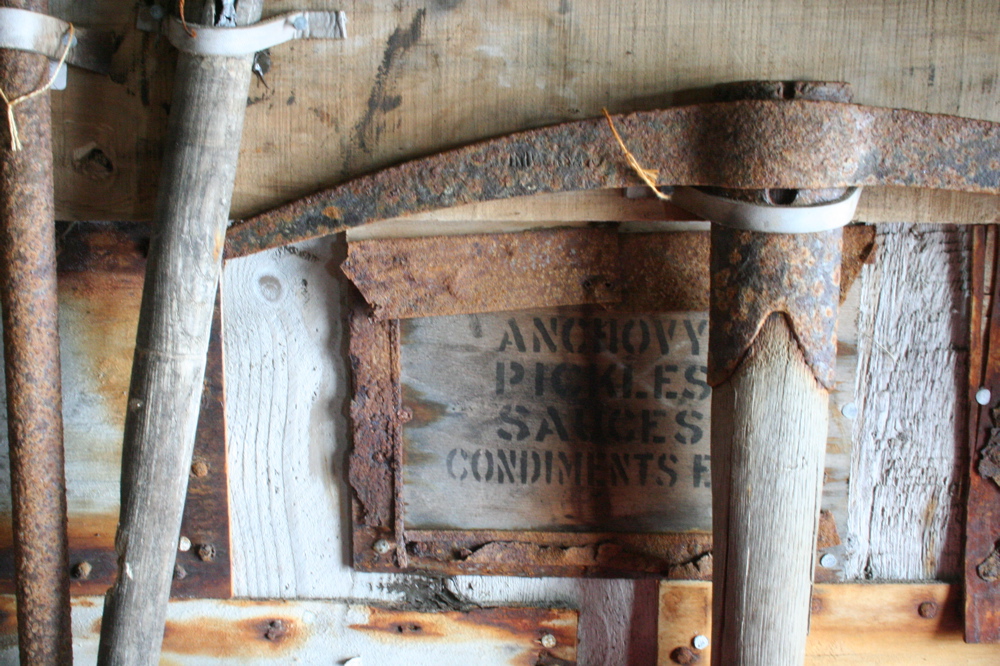
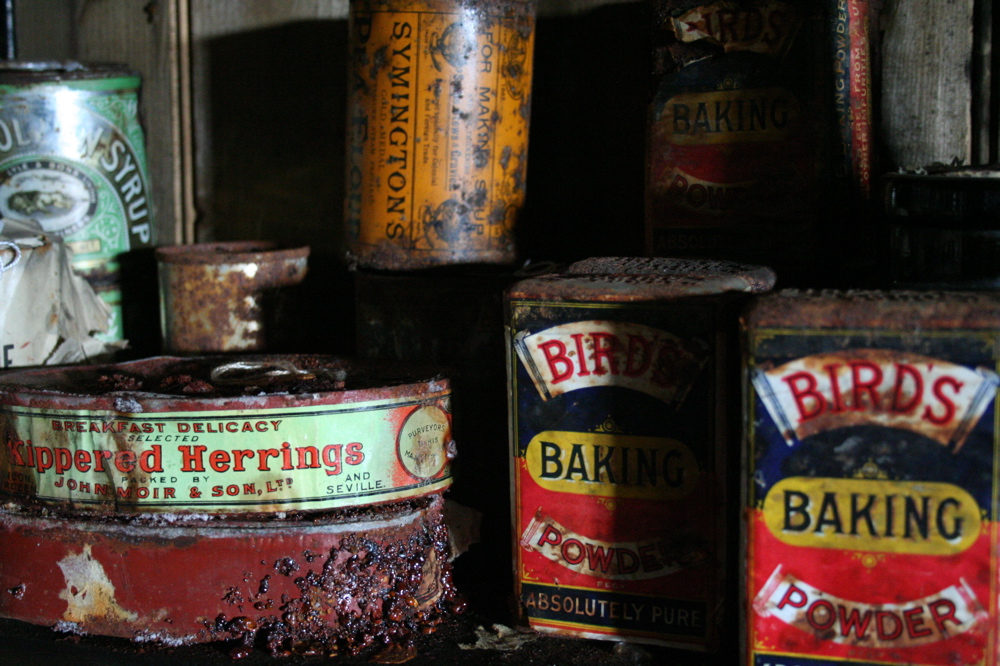
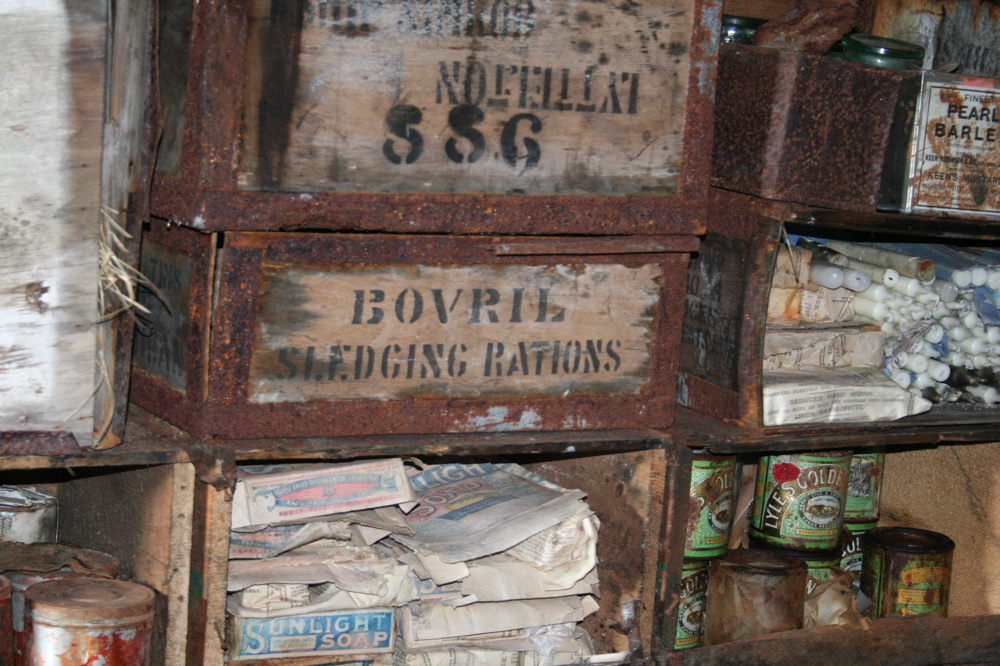
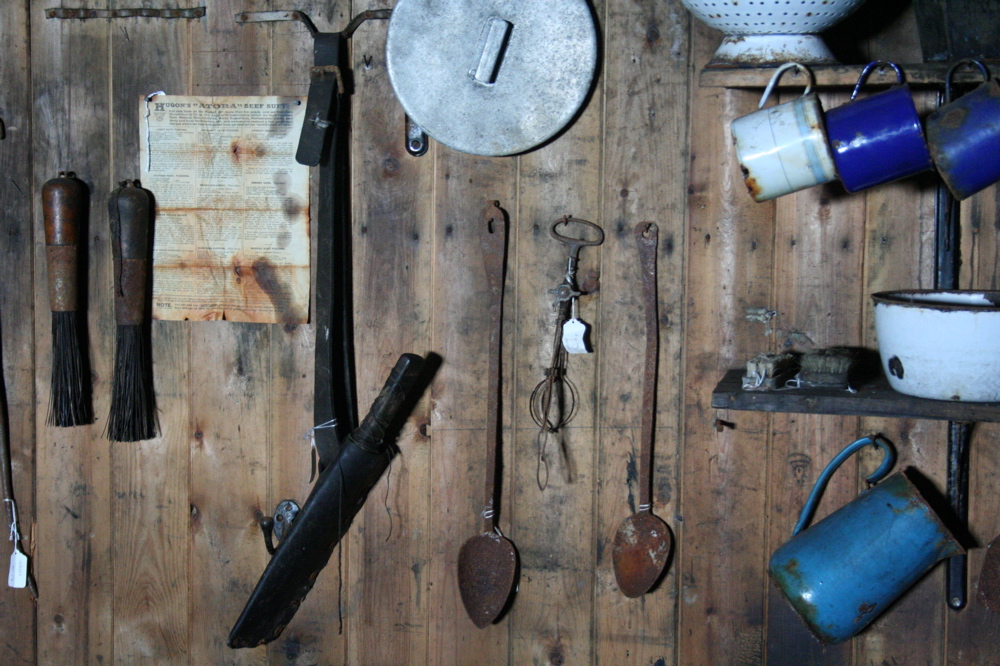
Ernest Shackleton's Thunder box. The hut itself is filled with a display of forgotten Byrd's Custard, Tate and Lyle's Golden Syrup, mildewed socks and a massive coal burning oven that must have kept the place quite toasty. (The images in my last post are from Scott's hut at Cape Evans, which we also visited, later in the day).

12/09/2006

Wild life

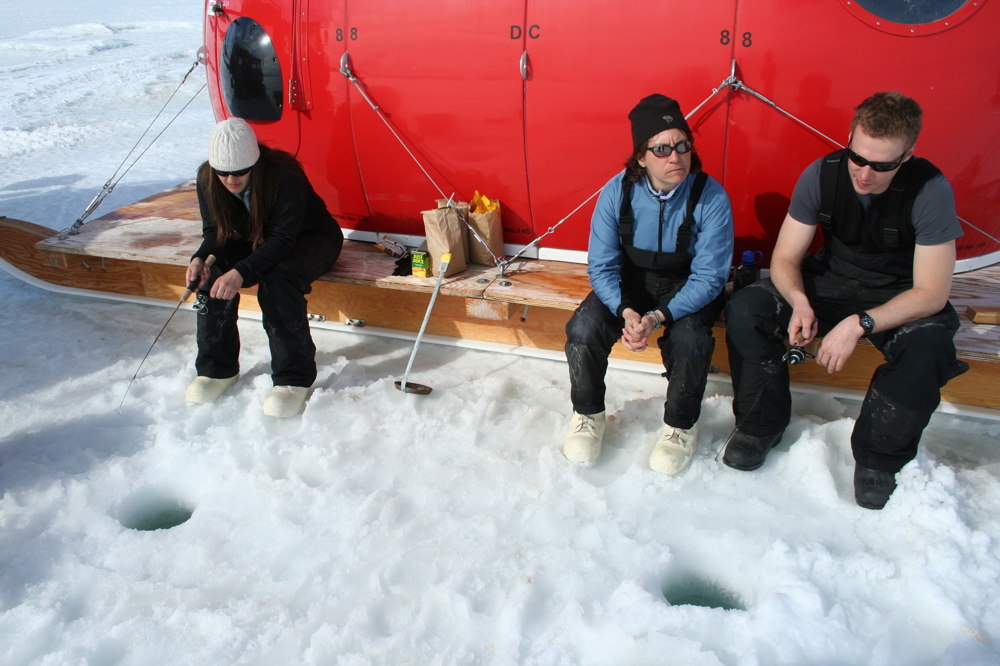
Reestablishing our McMurdo routine, we took a Pisten Bully out on the sea-ice yesterday on a visit to the chicks who fish. They had their Minnesota ice-fishing camp set up almost in the shadow of Bob Scott's Cape Evans hut, the one his expedition used for the fatal journey to the South Pole. It's about an hour and half drive at Pisten Bully top speed, which is to say around 25km from McMurdo.

What a difference two months makes! The ice runway is closed, its surface slushy and its depth perhaps insufficient for the landing of aircraft. The surface of the flagged route across the ice was melting and pitted with pools of water of indeterminate depth. Like New York City potholes after a rainstorm, it is difficult to tell whether you can drive right over them or if they dip deeply down towards the water below. It is one thing to sit comfortably driving a Pisten Bully, which must weigh a ton or so, over the frozen sea in subzero temperatures, with the heat blasting, and quite another to find oneself dodging puddles in a steamy, tropical fifty plus degrees F. With the sweaters stripped off and the windows wide open and the sun beating through the windshield it became all to easy to imagine the ungainly Bully sliding into an advancing melt-crack and sinking very rapidly to the bottom of the Ross Sea.

We passed one recumbant sausage-like Weddell seal after another, their enormous tubular bodies stretched out beside pressure ridges where, we knew, cracks must exist big enough to give the mighty mammals access to the water and its fish. It was lovely and hot and, as Gretchen the fearless fisherwoman put it, "a great day for taking the vehicles swimming."


Jessie, Gretchen and some dude named Tim jigging for "bernies" (Trematomus bernacchii)

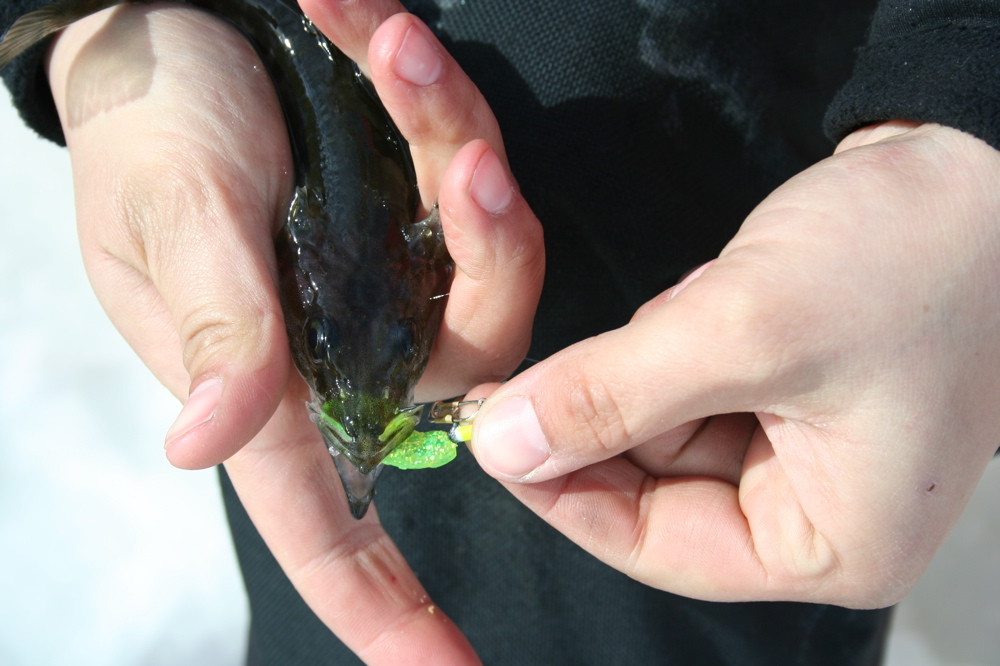
When we arrived at Cape Evans, Gretchen and her posse were reclining on their "tomato" shelter, basking in the sun and fishing with notably less intensity than on our previous visit so many weeks ago. Jess caught a rare and strangely beaked Dragonfish.

The dragonfish has a curious beak: Jessie on the catch and release

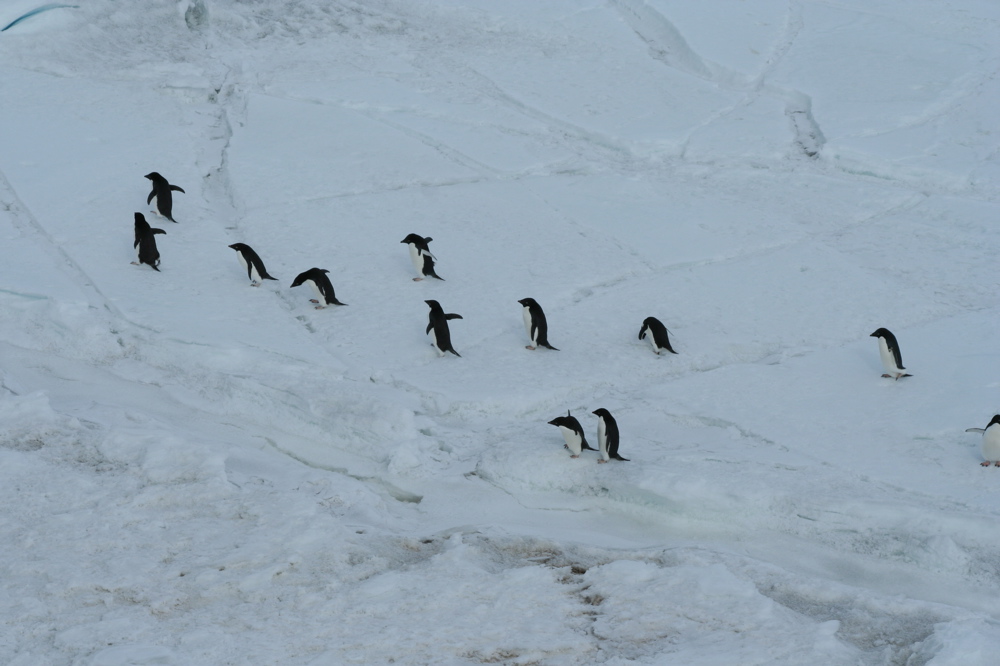
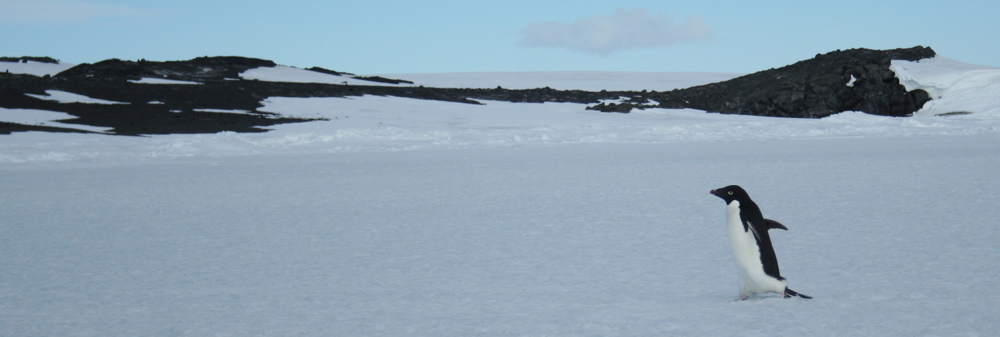
As we interviewed Gretchen about Antarctica's meaning in her life, she spied two Adelie Penguins waddling towards us across the ice. This brought an immediate end to the interview, as I have an "emergency penguin observation work-stoppage" clause in my contract. We walked out to meet them, flapping our arms like flippers and then lying down on the ice when they were about 100 meters off. Very curious, and without surface-based predators, they continued towards us to have a look. Gretchen pointed out that they are the only other family of birds besides parrots who manipulate the feathers of their crown and nape to change the shape of their heads to suit, perhaps, their mood. This was a piece of ornithological trivia unknown to me, a lifelong birder. We were soon able to see this behavior displayed.


The penguins continued, heading directly towards Scott's hut, as if they intended to visit its relics, and then continued past it onto an expanse of black volcanic rock. Here, perhaps lulled by the surface heat, they collapsed for a nap.

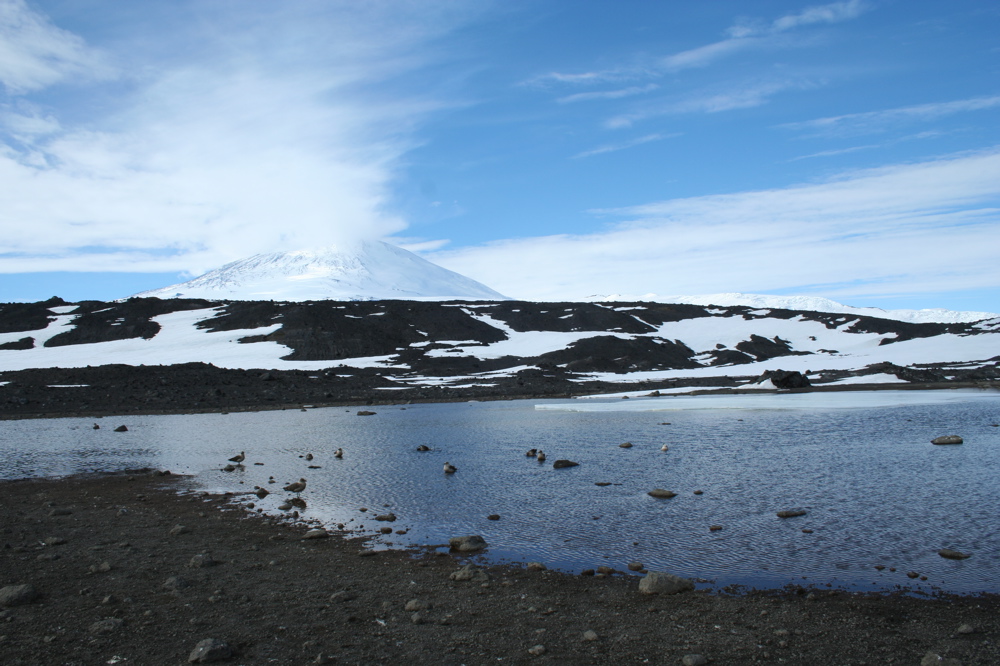
Erebus, pond, and a smattering of skuas


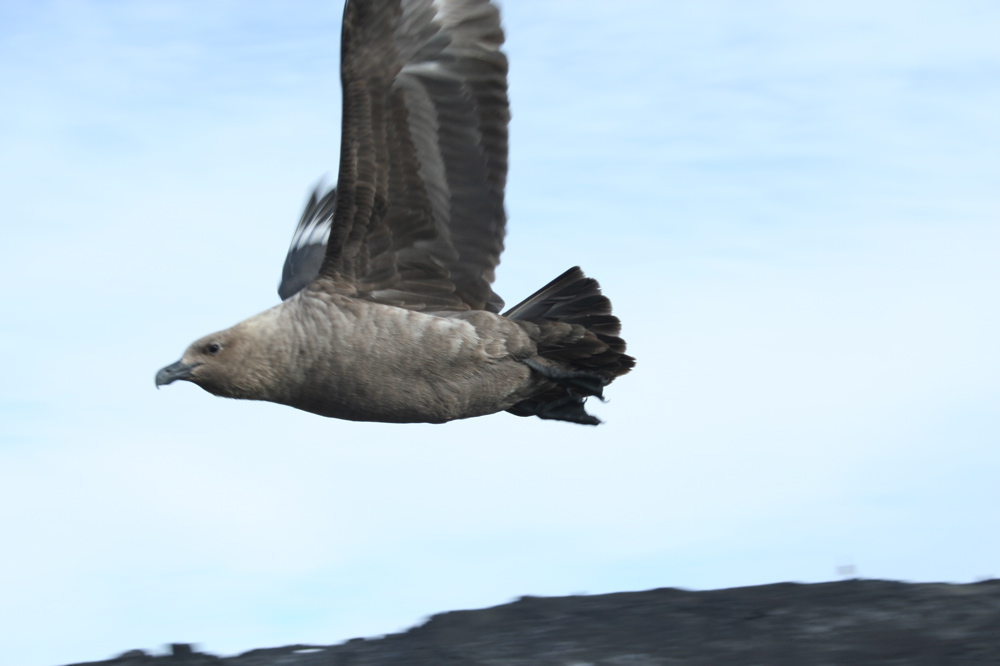
Nearby, the same passive solar gain of this black rock had created a pond, in which 15-20 skuas were splashing and washing and carrying on. Extraordinarily aggressive large gull-like marauders, they feed on the few delicacies the Antarctic ecosystem has to offer: penguin chicks and eggs, seal placentas and dead seals, fish scraps from Gretchen's bait pot and candy bars stolen from the hands of hapless McMurdoites crossing from the dining hall to the dorms.

Catharacta maccormicki, The South Polar skua. Note the pale nuchal collar, characteristic of this species.

Thanks to M. Deany

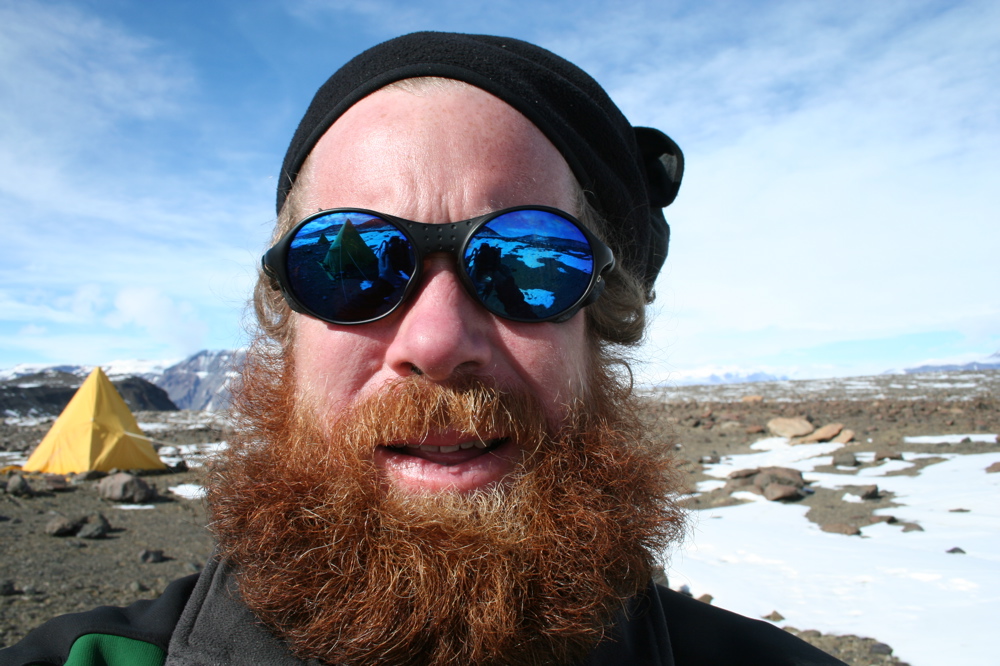
The man, the myth, the legend. Photo: Sylvestre Guidi


Now that I'm back in something like the modern world and have been able to wade through all the email and even speak to a few of my peeps on the telephone I've realized that while I was away a wave of confusion has been sweeping western civilization. Just how was antarcticiana updated in my long absence in the field camps of the McMurdo Dry Valleys?

Everything you've read here for the last two months came to you courtesy of the man of the hour, Michael Deany, who stayed up late into the evening on his days off, slaving to update this blog from files I managed to intermittently send back to McMurdo on passing helicopters. All this for neither personal gain nor glory. I owe him an enormous vote of thanks for all his efforts. Deany, even my mother thanks you from all the way in New Jersey; I spoke to her this morning and she asked me to impress upon you how wonderful it was for all my loved ones back home to be kept in touch with the movements and adventures of our happy little film crew.

Any typographical snafus, editorial catastrophes or errors of poor taste and judgement remain my sole responsibility; I signal only one to faithful readers. Two adjacent missives inadvertently contained the same text. For those of you who still eagerly want to know about dead seals and the Pecten Gravels, allow me to refer you here.

12/08/2006

A Narcissistic Exercise in Premature Nostalgia

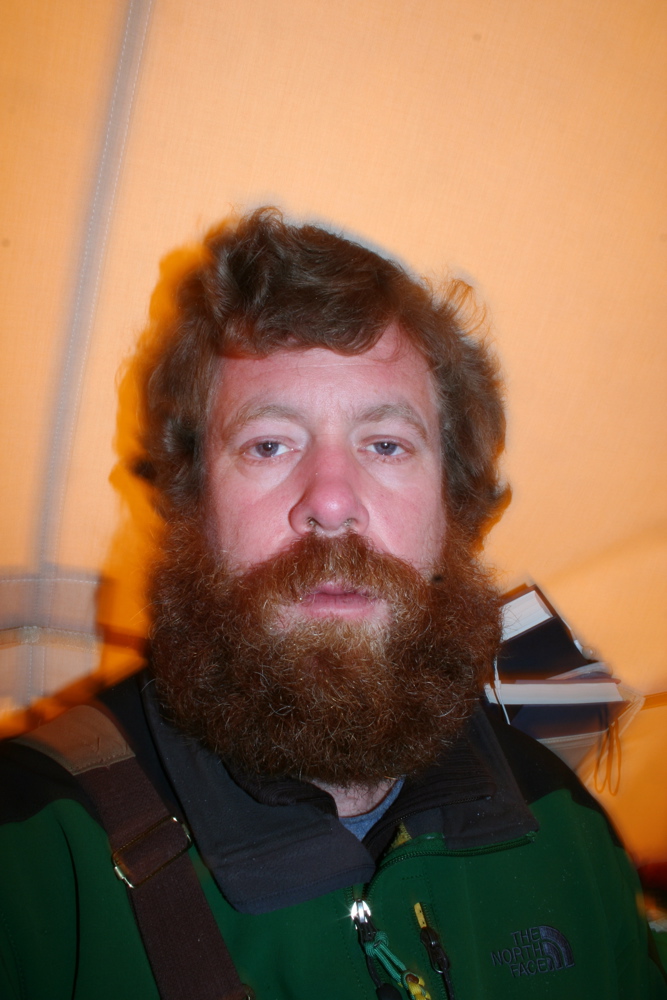
FORTY TWO DAYS TO GO: The first two weeks on Mt. Boreas were brutally cold, and it wasn't until several days into the experience that I realized the smart money fires up a Coleman stove in their tent in the evenings. This is taken only about four or five days after we arrived. I look like I am well ready to leave already; I'm stunned and shocked by the prospect of another month and a half in my icebox and look as if someone has hit me in the forehead with a rock hammer.


FORTY DAYS TO GO: A couple of days later, by which point I probably had a stove going, so that I seem to have been warm enough to remember to use the flash on the camera, and make this unique, absurd and abortive attempt at personal grooming. Trust me, after I saw this self-portrait I never made the same mistake again. We had no water to wash with and in fact did not wash, other than with the occasional alcohol swab, for the entire six and half weeks we were out in the field. This greasy combover look I have going on right here puts Rudi Giuliani to shame.


THIRTY-THREE DAYS TO GO In full on mountain-man mode, with a face full of snotsickles.


THIRTY DAYS TO GO This is from the evening after we moved camps, perhaps the most brutal day of the entire shoot, with endless hours of schlepping under a sun that blasted through the still-present ozone hole. I got scorched, with my lips swelling to double their normal volume, and then a few days later cracking and peeling. It was not pretty, but in this first bee-stung stage I think it makes for quite an attractive look. I rather resemble Angelina Jolie, don't you think?


TWENTY FOUR DAYS TO GO I'm grimly focussed on just making it through. By now the outside world has receded into oblivion; life outside of the camp is as abstract and difficult to imagine as a black hole, or the big bang. The occasional visitors look at us as if we were Papuan primitives with nose-bones, sitting down next to them at the Metropolitan Opera.


TWENTY DAYS TO GO This is around the time when my camp-mates stopped laughing at the Ali Fatah Morgana jokes. If it is possible to "go native" on an uninhabited frozen plateau free of all natives, then I have by this time done so. "I don't give a damn. Who cares if they try to come get us in one of those McMurdo helicopters? We got guns, we got granola, we got gorp, we can hold them off for months." Around this time I had the fantasy that I would to hike down to the nearest neighboring camp, inhabited by a couple I had never met, and then pretend I only spoke Arabic, meanwhile consulting my GPS as to the proper direction of Mecca. I really thought this was a good idea and that it would be really funny.


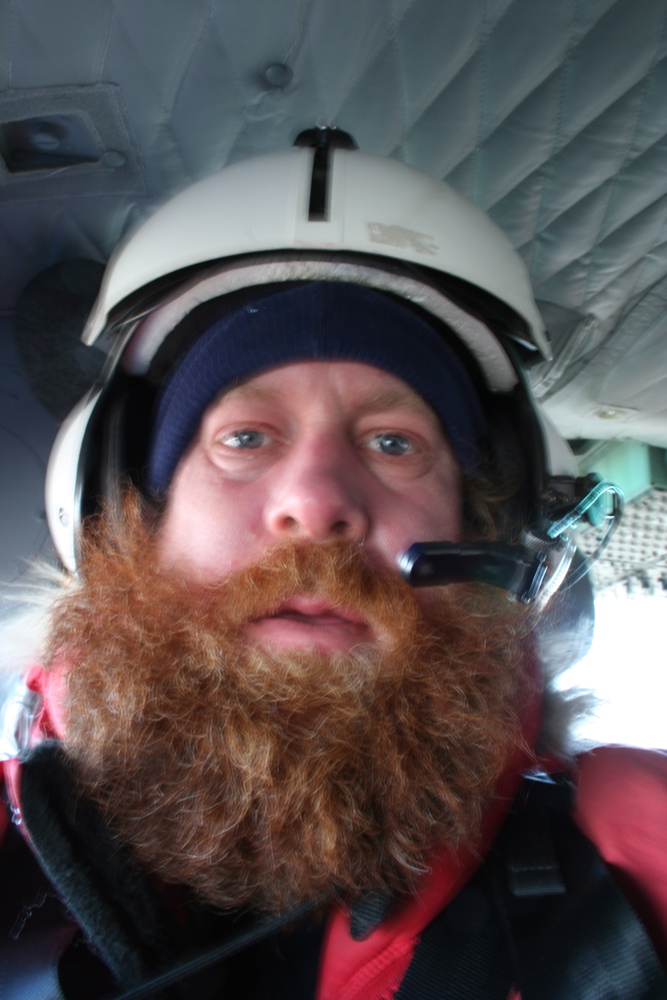
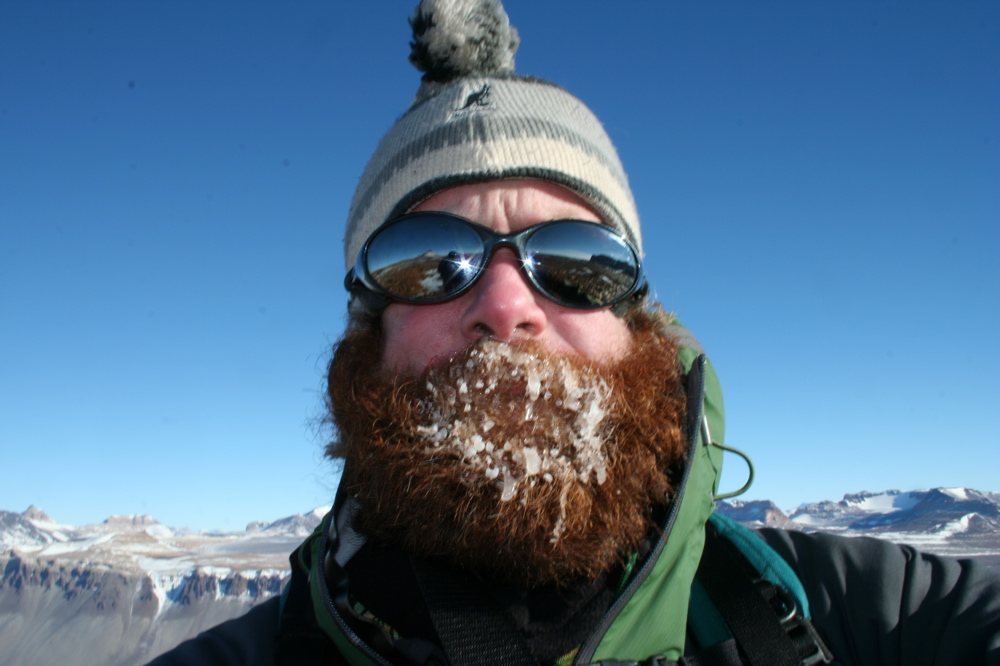
FORTY FIVE MINUTES TO GO I finally consented to get in one of those helicopters and head back to McMurdo, which is what passes for civilization around here. But is that thing for real? An enormous red hedgehog seems to be biting my face off. I'm trying to hold out so I can ceremoniously cut the whole mess clear on New Year's day, but that means another three weeks of growth to go. I don't know if I can hack that through the upcoming holiday season. If any wiseacres up in New Zealand start making Santy jokes, I guarantee I'm going postal on them with a cricket bat.

12/05/2006

I hear they have running water here...

The three of us flew back into McMurdo this afternoon, looking like a bunch of feral wind-blown prospectors covered in fine silt and stink. MacTown looks the same, except most of the snow has melted, leaving brown mud everywhere. I had six hundred emails waiting for me in the in-box. Mostly Viagra adverts, penny stock tips and Nigerians who desperately want to help me become wealthy beyond my wildest dreams. I'm going to look into that right after I take seven showers and put on fresh undies.

A first descent of the challenging south-eastern approach to Mt. Friis


Written Sunday, December 3rd

We pull out of the Friis Hills in three days. I'm not sure if this suggests we are eager to go, but already we are in a frenzy of packing. In part this is because Adam Lewis will leave ahead of the rest of the group; he is being picked up tomorrow and will accompany all the gear and leftover supplies we don't need back to McMurdo. So once again we are schlepping weighty boxes up the hill to the helo-pad.

As for ourselves we are supposed to head back to MacTown on Wednesday, the helicopter schedule permitting. According to helo-ops, Wednesday may be rather hectic and we might have to sit tight out here for a day or two, because a lot of DVs are in town. The term "DV" is another relic from the days when the Navy ran McMurdo; it means "distinguished visitors," and its use is identical to that of the acronym VIP. I remember it from a little bit over a year ago when I steamed, if that is the right word to use for travel on a nuclear-powered ship, from Dubai to San Diego, on board the USS Nimitz, a gigantor aircraft carrier. We dawdled somewhere off the west coast of India to participate in "joint exercises" with the Indian Navy, and I remember one day in particular on which various helicopters were detailed to ferrying DVs back and forth between the Nimitz and the absurd scoop-nosed claw-foot tub of a geriatric carrier that the Indians had brought to the party. The point being that our schedule is a little uncertain, as some of the helicopters may be tied up ferrying around Congressman High Mucketymuck and any other persons of particular power and influence who have decided that this is a good week for viewing penguins out of a chopper and satisfying themselves that the globe is not yet disastrously warmed.

Not that we are in a particular hurry to get out of here. (Anne, moments ago, before she lay back on her cot and began snoring off the effects of a grilled-cheese sandwich lunch: "Gawd, I want to go back to McMurdo right now like I want to shoot myself in the head.") Today we were astonished to find ourselves outside packing boxes, wearing light sweaters and thin gloves, and finding it positively warm. The thermometer now reads 16 degrees F, -8 degrees C, weather that in New York might inspire me to cancel that day's commitments, fire up the woodstove and curl up on the couch. We are settled in and acclimatized.


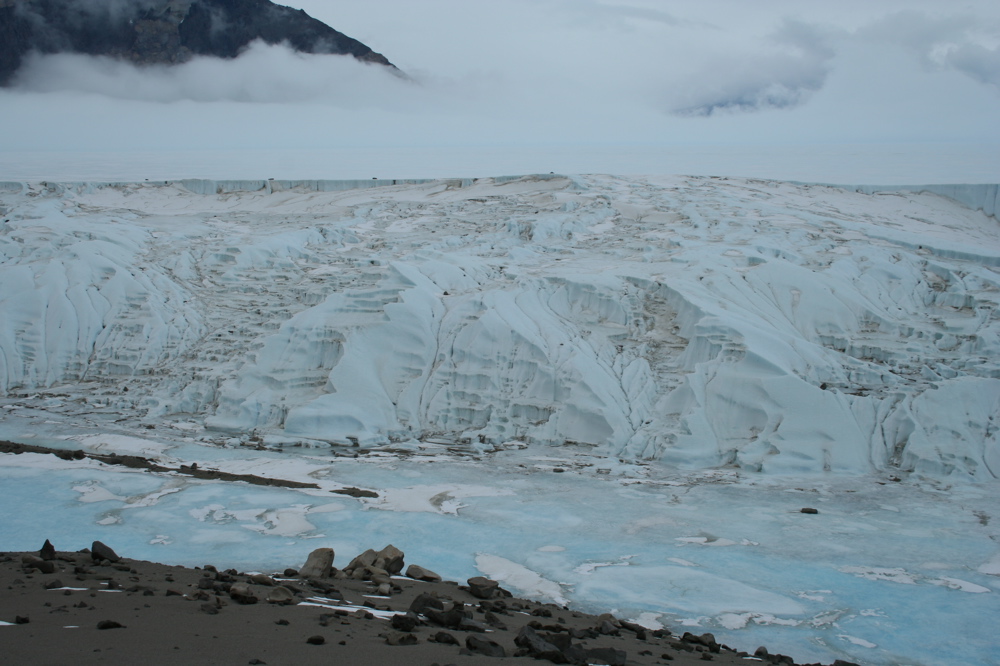
A couple of days ago Sylvestre and I took a farewell hike down to the edge of the Taylor Glacier. Since the very first night we arrived here on our little plateau and I walked out to a scenic overlook and photographed the enormity, I had wanted to attempt to climb down and see the glacier close-up. It looked doable, via a descending valley strewn with crumbled granite that steepened as it sloped downhill towards the ice. But the distance was deceptive. The glacier never seemed to get any closer as we hiked down, down, and down, jamming our toes against the ends of our boots and pausing occasionally to look over our shoulders in horror at the ever-more daunting climb back up and out, a climb we were adding to with every step. Eventually the gravel channel grew too steep and to avoid an unpleasantly sudden arrival at the bottom we set off at an angle across the scree, heading for what looked like a more gentle slope down, somewhere off to the south of us.


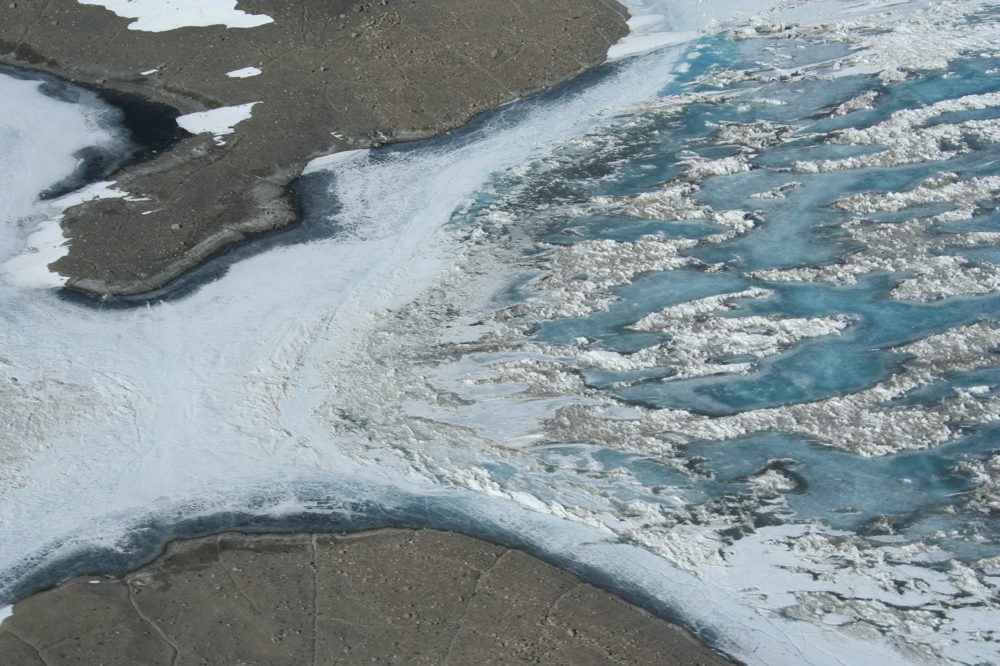
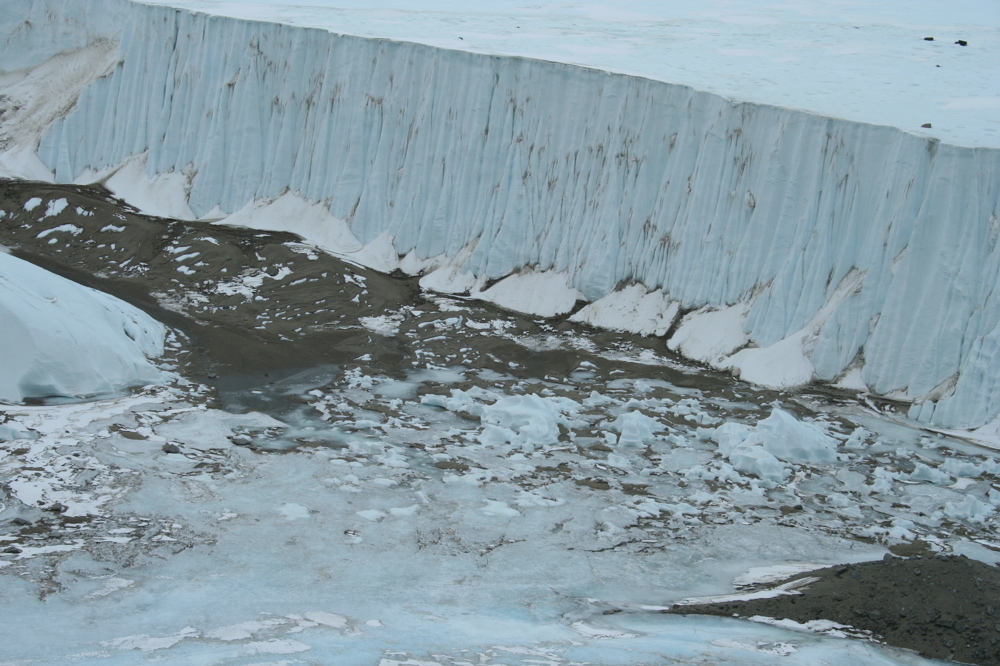
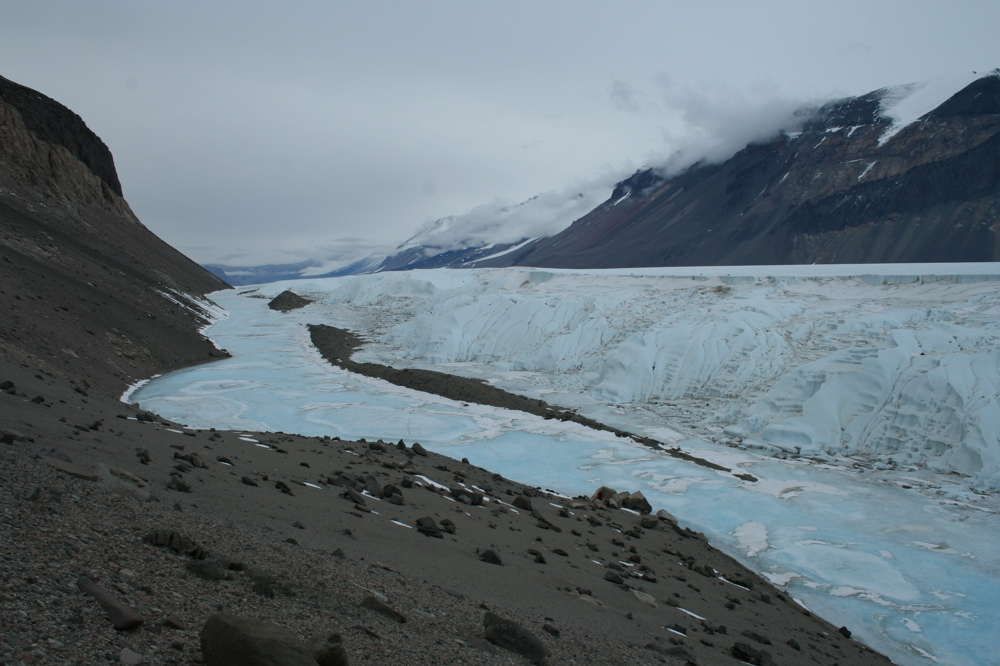
Finally, we knew we were near. The edge of the glacier, which from far up above looked narrow and of indeterminate but no great depth, revealed itself to be a towering ice-cliff some thirty meters or more high. Well before we reached the valley floor, where meltwater had collected and frozen to make a turquoise sheet of ice, we passed below the upper surface of the glacier. We found ourselves in a sort of canyon, with a frozen lake under our feet, the black dolorite cliffs of the Friis Hills on one side, and the mammoth verticle ice-wall of the glacier on the other.


Near an enormous granite boulder, where we sheltered from the wind to gobble chocolate bars and beef jerky, a sort of cleft in the glacier had created a gentle sandy slope up to its upper surface. It was a stream-bed, where melting glacier ice, and the wind had deposited grit carried here by the ice-flow. We scrambled up it and then traversed a snow-bank just below the top edge of the enormous ocean of ice. At the top, the way you might get out of a swimming pool by pushing up with your forearms, we were able to clamber up onto the glacier itself. I sat, dangling my legs, with miles of undulating blue ice flowing out behind me, filling the enormous valley.

Adieu, Taylor Glacier, I thought. Adieu, Friis Hills; this is how I want to remember you.


The climb back out was as brutal as we had imagined, six hundred vertical meters in little over a kilometer of crow-flying, according to my GPS. We zig-zagged our way up the loose rock and gravel, pausing more and more frequently to gasp for breath and admire the view behind us. Just before stumbling into camp we came upon the geologists, all four of them on hands and knees, sifting dirt through spaghetti strainers and grubbing in the dust as if looking for truffles.

"Success?" asked Adam Lewis. "Did you make it to the bottom?"

"Success!" we replied.

"You may be the first people ever to go down there," he said. "I've certainly never been down that way. You know all those mountaineers who come down to Antarctica looking to do 'first ascents' of unclimbed mountains? Well, I think you guys can safely claim this as a 'first descent.'"

"Hockey, anyone?" asks Sylvestre