Showing posts with label shameless self promotion. Show all posts

10/11/2012

"Walking to Guantánamo" at the University of the South


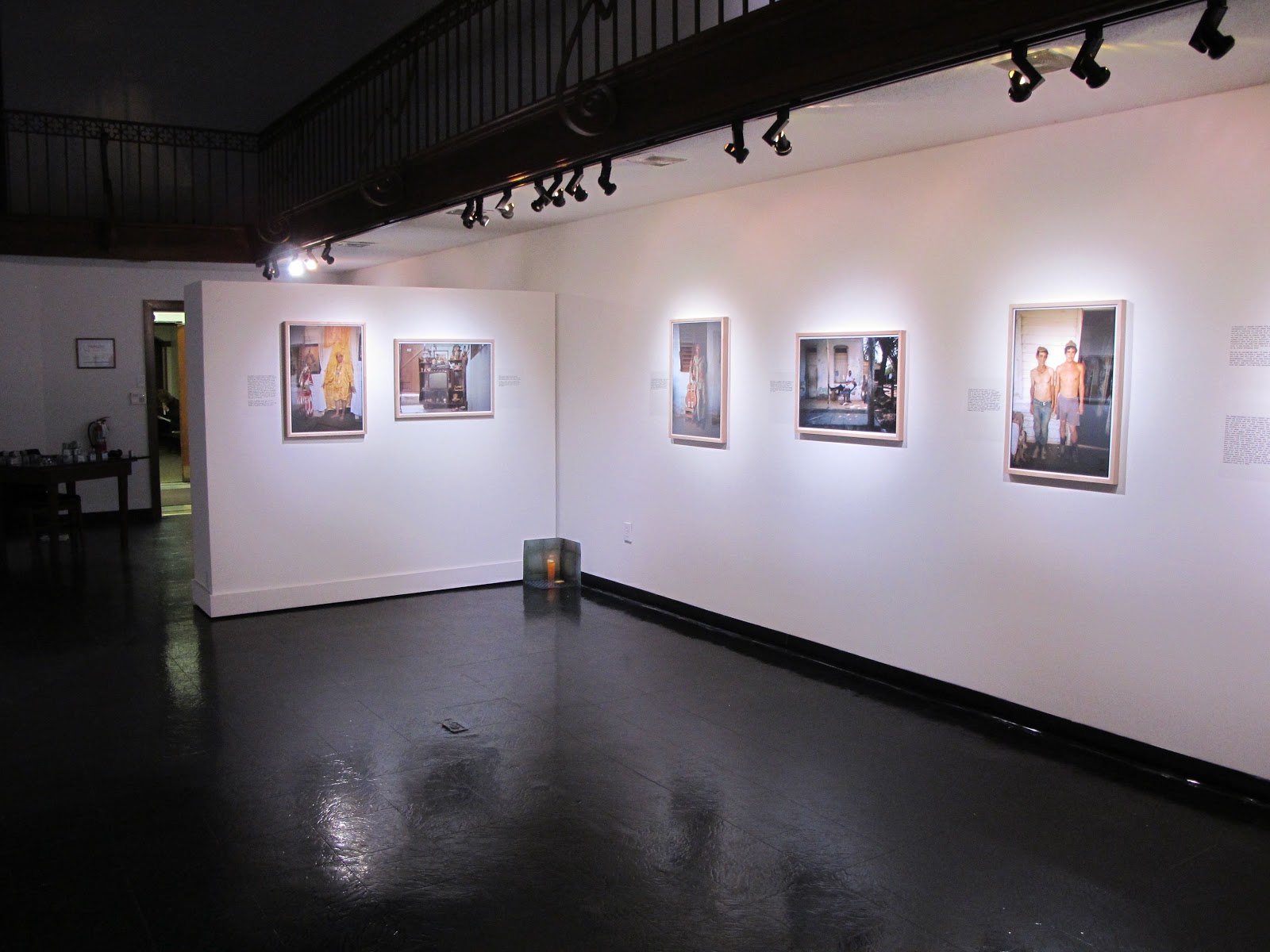
I am very pleased to announce that "Walking to Guantánamo," the photography exhibit, opens today at the Art Gallery of the University of the South, also known as Sewanee, in Tennessee. If in the region, the show will be up until November 20th.

On October 26th I'll be speaking in Guerry Auditorium at 3PM, adjacent to the gallery, reception to follow. I hope to see you there!


 Installation photographs courtesy of Shelley MacLaren, Sewanee


1/01/2012

Loafing on New Year's Eve


I'm attracted to superstition, but I'm not superstitious, except perhaps when it comes to natural processes. It doesn't seem to me to be black magic to feel that if the rivers are flowing and the clouds are blowing and the trees are growing as they should, then there is room for optimism. This is the source of the solace I take from the natural world, from wild places. The tide has gone out, but it will come in again.


So I took it as an auspicious auguring that the loaves of bread I baked as my contribution to a New Year's eve dinner last night were, if I say so myself, magnificent. The dough behaved as I expected it to, it swelled and rose in accordance with my understanding of the natural cycle of fermentation, understanding gained after significant effort and observation and much poking and prodding of moist compilations of flour and water. This is a blow-hardian way of saying that my sourdough starter is kicking ass right now.


It has been months since I used commercial yeast. I have no use for the stuff. An untouched jar of it sits in the fridge in the ghetto of mouldering condiments. This bread is made from water, flour and salt, one less ingredient than the Germans allow in their beer. Unless you count life itself as an ingredient, the wild, living yeasts of the air, which find their way into the starter to feed and multiply and expand. When they are doing their job this well, it is hard not to take it as a sign that it will be a glorious 2012!

I'm not bragging, I'm just saying: I would put these loaves up against Balthazar's in a shaolin kung-fu battle for bread supremacy. I apologize that there is no crumb shot, but I didn't want to bust any of these open before taking them to dinner, and snapping pictures of my own bread laid out on the groaning buffet table seemed dreadfully gauche, even for me. Technical details in the comments.


12/14/2011

On Newstands Now!

In what I suspect will be almost the very last time I have any excuse to blow my own horn with regard to Walking to Guantánamo, I am pleased to toot that the eminent academic journal Studies in Travel Writing has a special issue devoted to Cuba out right now.  My own name appears in its pages with alarming frequency. The journal, as far as I know the only one of its kind devoted to the genre I practice, one I often have difficulty explaining to people--so, you wrote a kind of a guidebook?--includes in the current issue a lengthy conversation between Peter Hulme and myself, two long excerpts from the book, and a review. I suspect I've seen the last of the last of these, although I haven't yet seen this last one, if you see what what I mean, but even if I've been raked over the coals I'll take what I can get at this point; not too many people review books three years after their publication.

In case they don't carry it down at your corner bodega, you can order your special commemorative edition here, all the way from Nottingham. Or at least look at the table of contents.

4/30/2011

Going back to Vietnam

My story on the phenomenon of Vietnam War tourism and US veterans who return to visit the places they once fought ran yesterday in the Sueddeutsche Zeitung, although not in their online edition. Today is the anniversary of the Saigon airlift. Here's the pre-translation original:

On the telephone, Mr. Vu speaks English with a clipped, military precision, quickly dispensing with the logistics of the next day’s excursion. “Do you need to visit Khe San?” he asks. “No? Fine. Just to confirm: the driver will pick you at 10:15 in Hue and bring you here to Dong Ha, where you will collect me and drive up into the DMZ.” Mr. Vu sounds like the real deal, a veteran of the Vietnam war; it is almost like the planning of a tactical assault. Mr. Vu is one of the very best, but there are many people in and around the ancient Imperial City of Hue who do what he does. Vu is a DMZ tour guide who takes visitors and Vietnamese alike on customized trips through the many notorious locales dotted along the former border between North and South Vietnam.

Replica of the "Peace Bridge"

Demilitarized zone tourism is a thriving business in Hue, something that would be impossible if the wounds were still fresh. The savage conflict that unfolded here is quickly receding into the fog, not of war, but of distant memory. Overwhelmingly youthful, the population of Vietnam seems focused on the future and the country's bustling, Chinese-style economy, while America is deeply mired in the conflicts in Iraq and Afghanistan that have defined war in the present millennium. In the inevitable comparisons the lessons of Vietnam would seem to have been forgotten; for most, the war has become history. But not for the veterans who fought here.

Along the esplanade on the north bank of the Perfume River, near the gates of the famed Hue Citadel, street vendors hawk used dogtags, the steel identity badges all GIs wore around their necks, listing their name, blood type and religious affiliation. Apparently authentic, they are lined up on a low stone wall along with other knick-knacks: North Vietnamese medals, Soviet-style enameled communist friendship pins, and antique Chinese porcelain. Not far away, behind the ancient and imposing walls of the old city, stand rows of tanks and US artillery seized by the North in the conflict known only here as The American War. Dozens of agencies dotting the tourist quarter of the city offer tours to the DMZ. Options range from an inexpensive day in a bus full of other travelers to the kind of individual tailored experience Mr. Vu offers, on which former servicemen can seek out the particular places that were of personal significance to them forty and more years ago.

 Inside the Vinh Moc tunnels, where North Vietnamese lived underground on the edge of the DMZ in order to avoid American bombs. The network of burrows is now a showcase bit of propaganda intended to underline the resilience of the outgunned but ultimately victorious North.

Mr. Vu, it turns out, is 34 years old, born in 1976, the year after the Saigon airlift. He is extraordinarily knowledgeable. He knows which branches of the US forces served where, and when, and which regiments were involved in which conflicts. On the drive to the preposterously named “Peace Bridge,” across the Ben Hai River, Vu pulls out a binder full of maps and Life Magazine photographs showing the landscape as it appeared in the late 1960s. The tranquil but dreary rice paddies stretched out on either side of the 17th parallel appear in them as a cratered, lunar devastation, like a heavily polka-dotted carpet.

It is gray, and raining, and peasants are driving their water buffalo along the muddy banks above the paddies. There is almost nothing left to indicate that the DMZ was the scene of some of the war’s heaviest fighting. The southern half of Quang Tri province, below the Ben Hai, was the first area in the south to fall, and the area to the north, Mr. Vu says, was the most heavily bombed of all.

Replica of the battle-scarred and bullet-holed loudspeakers used by both sides to broadcast opposing ideologies across the Ben Hai River.

In many ways, this is a simulated experience. The Peace Bridge is a copy, right down to the guard booths at each end and the towering columns of gunmetal gray loudspeakers, non-working replicas of the ones which used to face-off, broadcasting competing propaganda across the river in an incessant, deafening battle of volume. All this was bombed to splinters; these reproductions have only been here for the last ten years or so, Mr. Vu says, to satisfy the tourist demand. Why, a visitor wonders, do so many people want to see the DMZ?

“Most of my clients,” he says, “are in their 40s and 50s. Khe San, Hamburger Hill, the DMZ, these places are familiar to them from books and movies.” DMZ tourism has gotten lots of free publicity from Hollywood. Nonetheless, the phenomenon began with Vietnam veterans in 1991, the moment the US eased travel restrictions that had prevented its citizens from visiting the country. “So many of them are my clients,” says Mr. Vu. He estimates that in 1999, when he began giving tours, 30% of those he guided had seen active duty in Vietnam, and still today at least one in ten are veterans.

Mr. Vu with artillery shells, carefully repainted with the identifying codes and letters of US ordnance of the period.

Rob Allerheiligen, who was a First Lieutenant in the US Marine Corps in 1969, at Monkey Mountain outside of Danang, wrote in an email that “I think I always thought I would come back some day.” He spent a day in 2010 with Mr. Vu. “Even though I had not been stationed at any of the sites we visited, I had friends who were, and I have read enough about Marine Operations…to know what I was looking at and to be impressed at what those Marines accomplished there.” He says he experienced a “funny feeling” landing at Danang almost 41 years to the day after he deployed. “There was a flutter in my stomach and an increase in my heartbeat.”

Glenn Prentice experienced the siege of Khe San on the notorious hill 881S as a forward artillery observer, one of only 17 out of 350 Marines there who was neither killed nor wounded. In 1995 he felt “overtaken by an overwhelming urge to go back to Vietnam,” and returned on his own to the hilltop scene of his youthful trauma; the siege began on his 19th birthday, in 1968. “You come back with guilt that you survived,” he says. But the sense of obligation he feels as a survivor seems not only to extend to his fellow American servicemen; after making friends with a North Vietnamese colonel who had fought at Khe San as his enemy, he collaborated on building a water treatment plant in a village near Hue, and since his unlikely friend's death he has helped the man's daughter with her college expenses. “I promised I would take care of his family,” Prentice says.

“When you have so many traumatic events, and when you are so young, they are basically permanently imprinted in you,” he says. “You need to go back, because at times it feels surreal.” He has now returned 14 times since his first revisit, and helps other veterans who aren't sure how, or whether, they can manage the trip. Their reactions “run the whole gamut,” he says. “Sadness, depression, relief.”

“They are very quiet, and don't really want to share,” says Mr. Vu, barreling back towards Hue in a minivan through the misty rice paddies of today's utterly transformed Vietnam. “They're very emotional. I don't know why.”


1/13/2011

Cambodian Land Mine Victims' Orchestra on NPR's "The World"


This news may be a bit late, since I've already heard from an old friend in Los Angeles that she heard me on the radio while she was driving to work, but PRI's "The World" had my audio postcard from the market of Siem Riep on their Wednesday program. In case you missed it, such things are archived, thanks to the glorious internet. They've credited my photograph of the Cambodian flag to my long lost (imaginary) brother Peter, but I think that's just a typo. Or they've mixed me up with my fellow travel writer, the late author of the superlative Brazilian Adventure. Company I'm happy to be confused with.


The "audio postcard" includes my recording of a Cambodian land mine victims' orchestra. Such orchestras, composed of disabled players, are numerous in the touristy Siem Riep area, and at various temples in the vast and impressive Angkor complex. They are intended to tug at your heartstrings, as well they should. Some of the disabled players are war victims from Cambodia's savage 1970s, but the sad reality is that mine victims in Cambodia can be of any age and may have sustained their crippling wounds at any time in the last 40 years. Cambodia remains one of the most heavily mined countries on earth despite constant efforts at removal, and many, many people are killed and wounded each year by ancient mines that have long outlived the heinous military conflicts that saw them installed. Imagine living in a country at peace, trying to forget the horrors of the past, while living with the constant threat of being exploded in your own rice paddy.

6/09/2010

The Billboards of Gowanus in the World Media

In case you missed my post a few weeks ago on what the blank billboards of Gowanus have to tell us about economic recovery and our consumer culture, I'm pleased to report that the insightful folks at a major German media outlet took notice and licensed it, lock, stock and barrel. A translated version appears in the Suddeutsche Zeitung today, including extra, never-before-published photographs. It is always gratifying to have one's paranoid musings and anti-capitalist fever dreams elevated to the stature of real news!

5/24/2010

Kanaval, by Leah Gordon


Haiti has been firmly associated with grim news in the public imagination for so long that to announce that the country has a public relations problem is such an understatement as to seem almost beside the point. While most of the rest of the Caribbean survives, and some of it even thrives, on tourism, Haiti has been deprived of this lynchpin of the regional economy since the 1970s. Whatever fame its beaches and sophisticated franco-colonial nightlife might once have had has been long since eclipsed by a cyclical litany of political and environmental tragedies. Brutal dictatorships, coups d'etat, unrest, gang violence, organized crime, kidnapping, flooding, deforestation and now earthquake are all more likely associations conjured by the word "Haiti" than, for instance, the vision of sipping a perfectly mixed rum punch beneath a palm tree on a sunset beach.


But the country, like most places in the Americas deeply impacted by slavery, has a grand carnival tradition. Even if outside visitors have been few and far between for the last thirty years, Haiti's many calamities have done nothing to diminish local enthusiasm for an annual bacchanal on the order of New Orlean's Mardi gras, or the samba madness of Rio de Janeiro. There may be a silver lining to the neglect of kanaval by the outside world, in that, especially in the smaller regional celebrations of Jakmel, Haiti's artistic and cultural heart on the south coast, carnival has not been turned into a corporate spectacle of sponsored, motorized floats and grand orchestras. In Jakmel, carnival is a diffuse, multi-day pageant of impromptu street theater and neighborhood marching bands. Old carnival traditions, costumes, and characters are well-preserved there, and each year the same archetypal representations of local history and myth come out into the city and seize control of the streets. There just haven't been many visitors there, documenting.


My dear friend Leah Gordon, however, has been photographing Jakmel's carnival for more than fifteen years; I met her in Port-au-Prince on my first trip there, in 1993, and she had already begun taking the pictures that have now, finally, become a spectacular photo book, Kanaval: Vodou, Politics and Revolution on the Streets of Haiti, from the book publishing arm of Soul Jazz Recordings. I've been looking at Leah's images for years, wondering when some canny publisher was going to get it together to gather them together into a volume, and I can't recommend this work highly enough. I was particularly flattered to be asked to contribute an accompanying essay. The book is full of some of the most unique portraits I've ever come across, and you should immediately procure yourself a copy. (Don't let the misinformation in Amazon's listing put you off; the book comes out in June, in a couple of weeks, not February 28th, 2010--the earthquake inspired a slight delay in publication--and will be shipping shortly, not "in 2 to 5 months." I recommend "pre-ordering" it, as I've just done, since the $22 tag makes this such a fabulous bargain that the price must be another bit of incorrect Amazon data, one which I suspect they are legally obliged to make good on!)


All images: Leah Gordon

4/21/2010

Walking to Williamsburg

Ben Anastas and I will be reading on Thursday, April 29th, at the fabulous Pete's Candy Store, at 709 Lorimer Street in beyond-trendy Williamsburg, Brooklyn. This is my first area appearance in some time, and since I have fantasies of disappearing soon to begin another project almost as unlikely as walking across Cuba, it would be wonderful if you could join me.

Pete's is a comfortable and conveniently located bar that has been hosting one of Brooklyn's very best reading series for over nine years. Cold beer and good books guaranteed. That's at 7:30 PM.

If you are the rare person who is reading this blog and still has no idea that I wrote a book called Walking to Guantánamo, I have a website about the book HERE.

2/14/2010

Blow your own horn department


Got home to a pile of mail, a healthy amount of which turned out to be newspaper clippings of stories I wrote. A full page spread on the Ghetto Biennale in the Miami Herald, with five of my photographs, multiple copies of a couple of front pages in the Suddeutsche Zeitung feuilleton, and a piece for the Times of London.  A CD of my report for the BBC World Service, which I had never heard before, since it never made it online, even though it played across at least five continents. Muchas Gracias to all the people who got it together to send them to me!

1/01/2010

Come on down to New Orleans...


Walking to Guantánamo, not the book, but the photography exhibit, opens January 9th at the Antenna Gallery in the New Orleans Bywater at 3161 Burgundy Street. Hope to see you there!

12/28/2009

The Ghetto Biennale online

Now online is PRI's Christmas day edition of "The World," which included my report on the Ghetto Biennale in Port-au-Prince, Haiti.

If you are visiting from "The World" and want more, scroll down a couple of posts for additional images and commentary from Port-au-Prince's Grand Rue. I'll happily address any questions left in the comments.

12/24/2009

The Ghetto Biennale on PRI's "The World"

I'm assured that tomorrow, on Christmas day, my report on Port-au-Prince's recent Ghetto Biennale will air on PRI's The World. If in the United States check your local NPR affiliate station for showtimes HERE. For all you international listeners, the story will post to the PRI website on Monday, the 28th. I'll put a link up then.


In the meanwhile, they've already posted a Flickr set of my photographs from the trip, along with the almost oppressive suggestion that you visit this very same blog to "see more about the Biennale." Why oppressive? In addition to working on the piece for The World, I spent much of the last ten days writing stories about the event for the Suddeutsche Zeitung, the Times of London, the Miami Herald and the BBC's From our own Correspondent. Keeping all of these stories fresh and different has been enough of a challenge without more blogging on top of it.

Nonetheless, for those of you visiting from The World's link, antarcticiana refuses to disappoint, so here are a few more images from my recent trip to Haiti, where I was hanging out on the Grand Rue with a group of sculptors who make amazing vodou-assemblage art out of the discarded refuse of western civilization.


A detail from an André Eugene sculpture of a "Gede," installed right on the curb of the Grand Rue, along the Boulevard Jean-Jacques Dessalines. The entire figure is about seven feet tall, with a ribcage welded together out of rebar. As I understand it, Gedes are a tribe of spirits representing the ancestors. One of the foremost among them is Bawon Samedi, literally "Baron Saturday," who is feted at the beginning of November with a vodou ceremony clearly correspondent with the Christian All Saints Day. I've blogged about the annual Gede festivity at Tap-Tap in Miami, before. The Gedes manifest a beguiling combination of sexuality and death, which Eugene explained to me in terms of a yin-yang duality he says permeates vodou. The Baron's voracious sexual appetite, he said, represents life, through procreation; but wherever life is present, so too is its opposite, death. The head of this sculpture is an actual human skull. Eugene says these occasionally wash out of the cemetery up the hill, appearing in the streets during violent storms, but they are so prevalent in the work of the Grand Rue artists that something more than hurricanes must be at work. I suspect locals now collect them and pass them along for a finder's fee.


A "Tap-tap," or public bus, sporting a mural of "Sweet Mickey," a popular konpa band based out of Petionville, the rich suburb in the hills above Port-au-Prince. Konpa (compas) is the dominant dance music of Haiti, a slow lilting groove something like a francophone version of salsa, danced "kole-kole," meaning "stuck together." Religious imagery is at least as popular a motif as pop-culture, with a special fondness for the "Jesus is my shepherd" theme as in this image on the back of the Tap-tap, below.


As part of a film crew I once made the long and kidney-churning drive to Canje, in Haiti's remote Central Plateau, to interview Paul Farmer, secular saint and subject of the Tracy Kidder biography Mountains Beyond Mountains. Farmer explained Haiti as "9,000,000 Africans kidnapped and dumped in the middle of the Caribbean with no way to get home." In the traditions of vodou and even in iconography such as that on this Tap-tap, which reads simply "Black Africa," that heritage is still very much alive, evident and celebrated. A visitor arriving to Haiti after being blindfolded and put on a plane could easily imagine that they had been transported to Senegal or Côte D'Ivoire, rather than to one of the Antilles.

 
But the old connections of the colonial Caribbean are equally strong. One evening, hearing a brass band playing, I wandered out of the gates of the famous and fabulous Oloffsson Hotel, which fifty years ago served as the setting for Graham Greene's The Comedians. I followed the sound to an outdoor basketball court down the road, where these musicians were practicing for carnival. The ensemble included only drums, an array of horns, and voices. Robert Peterson, the sound artist mentioned in the radio piece I did for PRI's "The World," joined me. Originally from Louisiana, he was bowled over by the similarity between this Haitian carnival music and the brass bands of New Orleans. Before the Haitian revolution and the Louisiana purchase, Port-au-Prince and New Orleans were of course sister cities in the French colonial enterprise.

On another occasion, sitting on the veranda, we heard more passing musicians. After just the very first few notes, Robert blurted out "that's funeral music." He told me that before coming to the Ghetto Biennale the farthest he had been from home was a trip to the Canadian side of the Niagara falls, but he took to Haiti immediately, wandering about with his digital recorder in a kind of exploratory ecstasy.

In the age of jet-travel and US hegemony the old trade routes that linked the great ports of the Caribbean basin have faded in our collective memory. Uncovering evidence of them is always exciting.


Much as this looks like another assemblage by the sculptors of the Grand Rue, this is a ritual space, the vodou equivalent of a shrine or altar, outside in the yard at the home of the local vodou priest. There are likely cauldrons, repositories of spirits called by the priest to do "work" on behalf of practitioners, buried in the ground beneath this installation. In Cuba I saw bundles almost identical to this thread-wrapped ball, in similar environments. The bundle most probably contains symbolic objects collected together by the client at the behest of the spirit, speaking through the priest. If the client wishes to ensure the faithfulness of his lover, for instance, the bundle might contain a lock of her hair, a photograph, or a stolen swatch of fabric from her clothing. The Hollywood stereotype of the "voodoo doll" probably originates from a mis-characterization of this sort of symbolic substitution of part for whole.

 
All kinds of cast-off material are incorporated into the work being made on the Grand Rue. These stick figures, with heads taken from the discarded dolls of North America, are wound around and around and around with lengths of cassette tape, mummified in music.

 
Another Grand Rue creation, a sort of Haitian Carmen Miranda, with a headdress made from 7up, Guiness and Prestige Beer bottle caps.

12/15/2009

Times of London


Knick-nack shelf of postmodern gargoyles on the Grand Rue, Port au Prince

My first story on the Ghetto Biennale ran in the Times of London over the weekend in the Saturday Review section. To date no trace of it online, as far as I can google. If you are in the UK, save me a copy.

11/13/2009

Sean Hannity and Cuban Government Propaganda

Political rallies exist, almost by definition, as a demonstration of force, commitment and intensity of feeling about a given issue. The more people who show up in support of a particular position, the more legitimacy, or at least gravity, it garners in the eyes of the world. The spectre of thousands of people piling on buses and heading to Washington implies a particular level of sacrifice: the wee-hour alarm clock, the milling about the assembly point in the dawn chill, the long ride on a stinky bus, the car-sick mascot. All this is why twenty thousand people assembled on Capitol Hill are worth more than a million clicks on an email link that says "sign this petition," and it also explains why I was so irate after my mother and I read in the New York Times, on the day after attending a mammoth demonstration attempting to prevent the Iraq war, that "thousands" of people had attended. We were sure (and likely correct) that "hundreds of thousands" would have been more appropriate.

There are, of course, tried and true methods to boost the numbers. Serving wine and grilled steaks at your rally will almost certainly inspire a higher turnout, as will good weather and the promise that celebrities and entertainers will appear on the stage of your cause.

There are some even more artificial methods for boosting the wider public perception of the numbers, which is what really matters. One of the classics is that used by both the "fair and balanced" Fox News and the state-run television network of the Cuban government. If your rally is sparsely attended, simply include video footage of a much larger crowd of people from some other moment in time, in order to create the illusion of numbers. Thank God for watchdogs like Jon Stewart:

The Daily Show With Jon Stewart
Mon - Thurs 11p / 10c
Sean Hannity Uses Glenn Beck's Protest Footage
www.thedailyshow.com

Daily Show
Full Episodes

Political Humor
Health Care Crisis

You are wondering where Cuba comes into this. In the year 2000, during the Elian Gonzalez crisis, I was busy clawing my way across the island, preparing to write Walking to Guantánamo. The country was subjected to one gigantic rally after another, propaganda masterpieces demanding the return of the child Elian to Cuban soil. I happened to be in Camagüey when it was that city's turn to host one. In the morning the sounds of the distant rally boomed over the rooftops, and the air was churned by the helicopters filming it. I hope it isn't obnoxious to quote from my own book:

I followed my ears to the demonstration, walking through empty streets lined with parked guaguas. The battered buses had brought demonstrators from every corner of the province. Nearing the zoological gardens, I fought a tide of people streaming out of the rally, each with a tiny paper flag....

As soon as they had been counted, and filmed by the helicopters, many people took advantage of the free transportation to enjoy a day in the city. I joined the streams of people flowing toward the center of town. Like the Cubans, I had done the required and put in a brief appearance.

Back on the television at [the house where I was staying], the masterful multicamera production continued uninterrupted, looking just as urgent and crowded as it had before. Again and again, the live editor cut to sweeping aerials from overhead helicopter shots, demonstrating the magnitude and density of the crowd. But the sound of the rotor blades was no longer heard whirring above the house. The crowd scenes had been filmed earlier in the day, just after the buses unloaded.


I'll leave aside the irony that Comedy Central is the only network now consistently bringing us quality advocacy journalism. Someone very sharp at The Daily Show spotted this egregious use by Fox of typically authoritarian propaganda technique, and, perhaps because of a viral campaign of complaints to the FCC, Sean Hannity was forced to apologize:


This smarmy man has a very creative use of "inadvertent." Doesn't this word mean "by accident," or "not on purpose"?  In my long and illustrious career as a sound recordist for film and television I think I've been sufficiently exposed to the workings of broadcast news to ridicule this notion. The introduced footage is from two months ago. Are we meant to believe that Fox News simply has piles of videotapes stacked hither and thither in the edit suite, unlabeled and undated? Here's a hypothetical, fictional conversation between an editor and a producer, which I've created especially for this occasion and inadvertently include here:

Producer: Hannity wants to say that there were 20,000 people at the rally.
Editor: I'm not really sure we have the coverage for that. The cameraman pretty much filmed the steps where the Congressional delegation was standing.
P: Didn't he get cutaways of the crowd?
E:  No, he did. (Weren't you there, telling him what to shoot? Maybe you were at Starbucks?) It's just that the shots aren't really too impressive. It looks like a few people are having a picnic out on the lawn and a couple of the usual loonies are standing around holding their signs. There's not much there I can work with.
P: Hannity's going to be pissed. What are we going to do about it?
E: Well, I did have one thought. You know I cut that segment on the Glenn Beck rally, back in September.
P: What about it?
E: How can I put this? I still have a nice fat folder of selected crowd shots from that rally, right here on my hard drive....
P: Whoa there, cowboy. Great idea, but I never heard a word about it, okay? Plausible deniability. But if you think you can make it fly, go for it. I'm going out for coffee, you want a soy chai latte?

 At least the Cubans are smart enough to use footage from the same day.

6/29/2009

I'm in the newspaper underneath Sasha Grey


Suddeutsche Zeitung this weekend ran my photograph and article on Rwandan gacaca, drawn from the experience of working with Anne Aghion during the making of My Neighbor, My Killer. The article is print-only, and in German. Click the image below to read it.

2/28/2009

Man on Wire

One of the added benefits of passing my days hard at work filming on a circus lot is that bits of practice equipment are scattered about everywhere. Taking full advantage of my union-mandated coffee breaks and those relaxed interludes when there is little to shoot, I've become quite adept on some of the machinery, if I say so myself. It's only a matter of time before I transition to the big top, and maybe even the high wire.


Photo: Sergio Nguyen