11/14/2006

Dispatch from the Friis Hills 01


November 8th
Dear Deany,

I hope you are well and everything is lovely back across the sound in MacTown. Just wanted to let you know that my old place over by Mt. Boreas is for rent, on the off chance you know somebody who is looking. It lacks some amenities (no toilet, no running water, no heat, no structure to speak of) but to accentuate the positive it is airy, not to say breezy, and it has great views. And the rent's not bad. Anyway, pass the word around; if anybody's interested they can reach me on walkie channel 13 on the Taylor Valley repeater.

We up and moved to the Friis Hills a couple of days ago--four helicopter loads worth of geologists, filmmakers and gear, over two tons of it. It was an endless day of interminable toil, the kind that brings to mind the construction of the great pyramids. One of the things that made it so long was that it began the day before when we prepped as much gear as possible and schlepped it to our makeshift helo-pad. On moving day itself we got up at 5AM in order to have enough time to get everything packed and wrapped before the helicopter arrived. First we took the tents down, which involved removing a ton or so of rocks from each of the tent aprons and extracting weighty pile of steel tent stakes from two weeks of very intimate connection with the permafrost. We then humped generators, fuel cans, rock boxes full of geology samples (rocks, dude, boxes full of rocks...), rock boxes full of as-yet-uneaten food, camera gear, tents, tool kits, urine barrels full of very heavy frozen urine, stoves, rock boxes full of tent stakes and so on up the hundred meter uphill trek to the landing zone. Serious John Henry chain-gain sort of stuff.

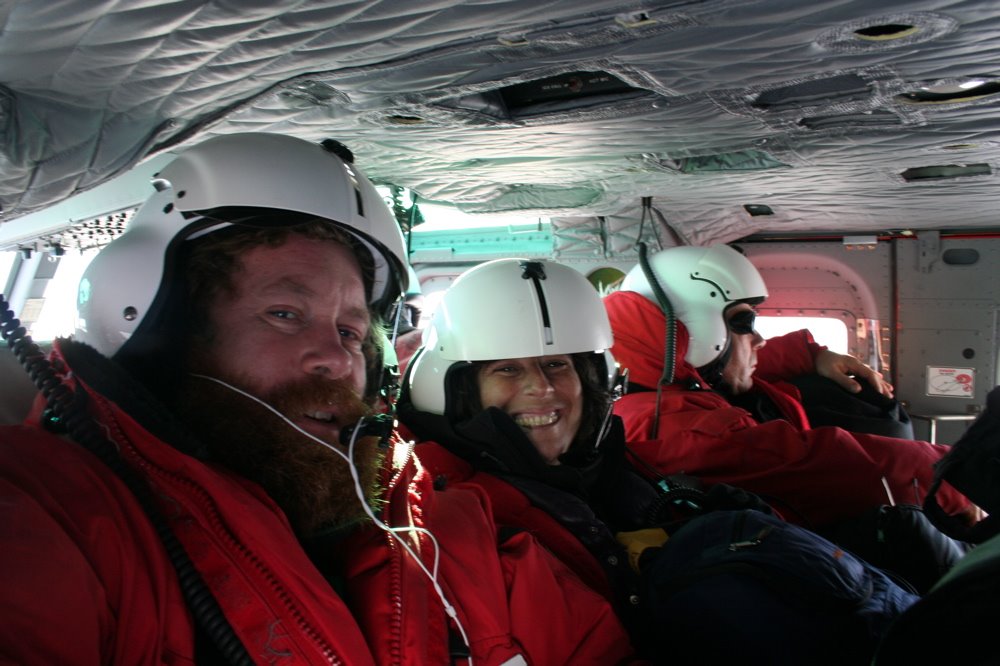
Imagine arriving at the very last moment when the family station wagon is just setting out to take junior off to freshman year at college. You want a ride. No problem, but you have to squeeze in under the tailgate. This should give you a fair idea of what the helo-ride was like; four of us sitting on a bench the size of a racing canoe seat facing, inches away, a solid wall of our own luggage. When I wasn't gnawing on my knees the brief glimpses I managed to steal out of the window, of the landscape passing beneath us, suggested that it was quite probably spectacular.

Dumped unceremoniously one hundred meters or so downhill (of course) from the site of our next camp, we began the schlepping process anew. Sweating and weary, just as we had finally finished moving the mountain of stuff that had refashioned the the helo into a sardine can, the next helicopter arrived with a fresh pile. On it went. Two more followed. The day went on and on until I had hammered the last tent stake back into the frozen ground and I collapsed into my sleeping bag.

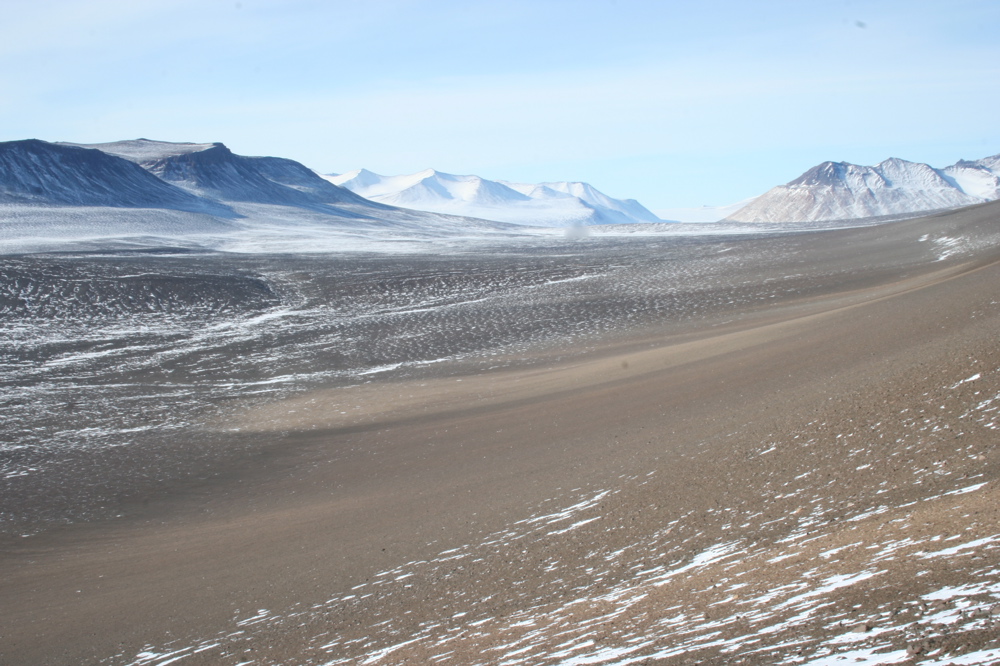
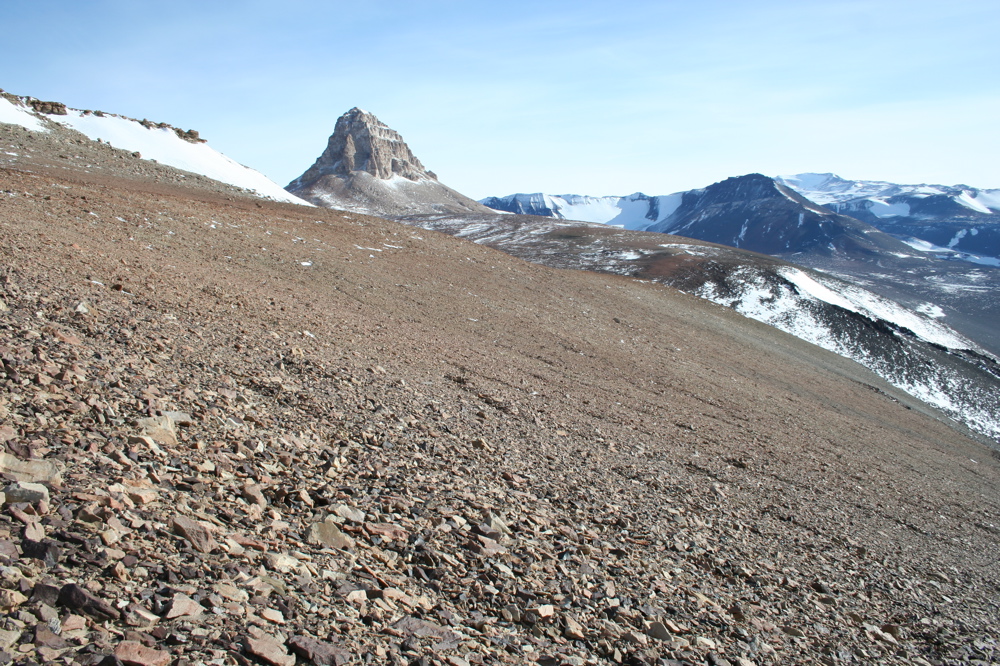
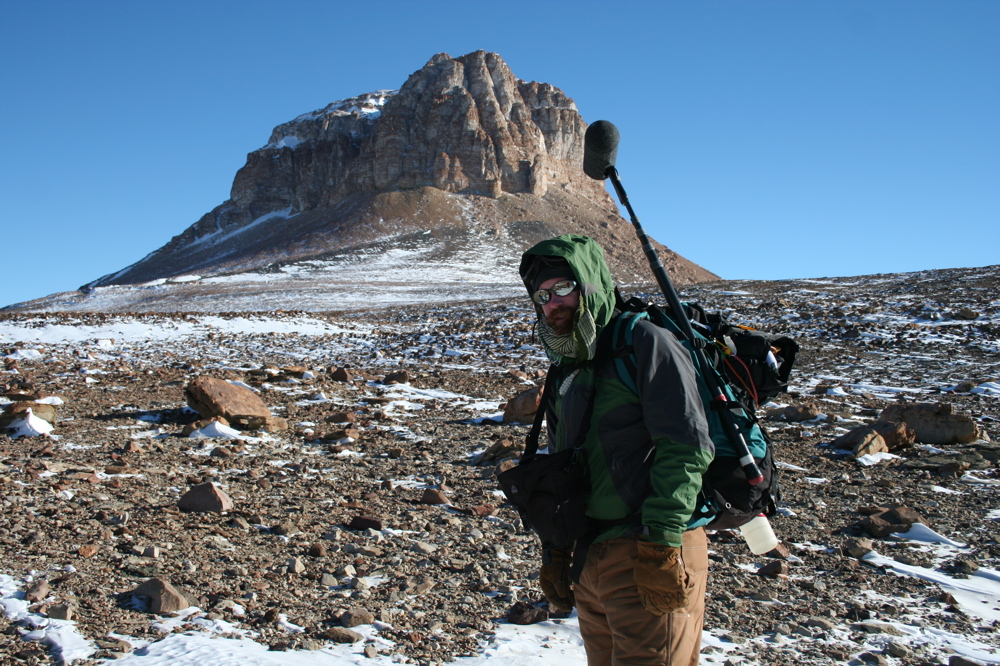
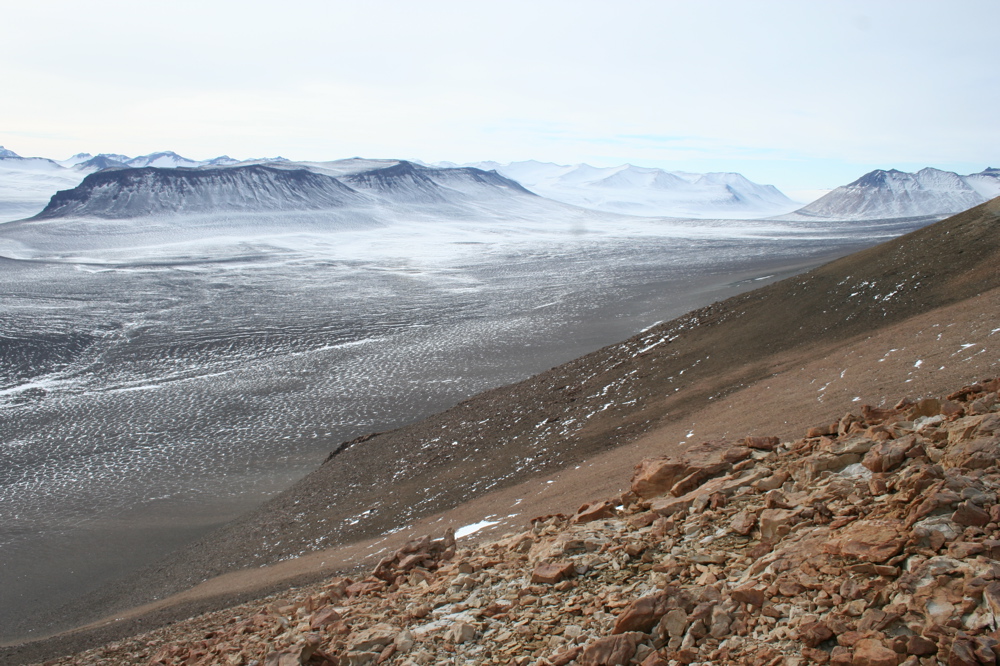
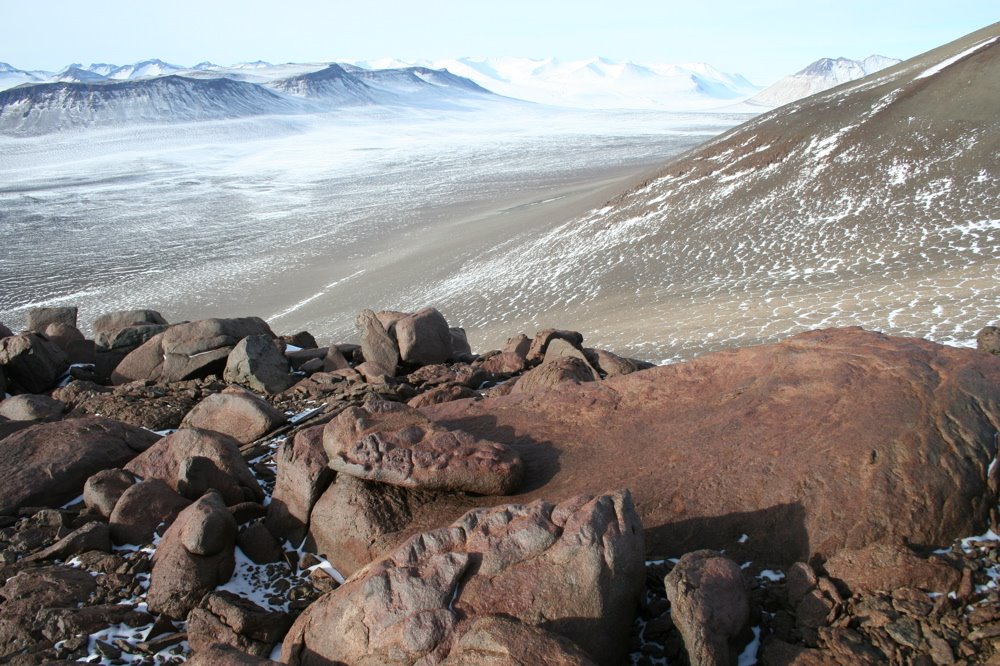
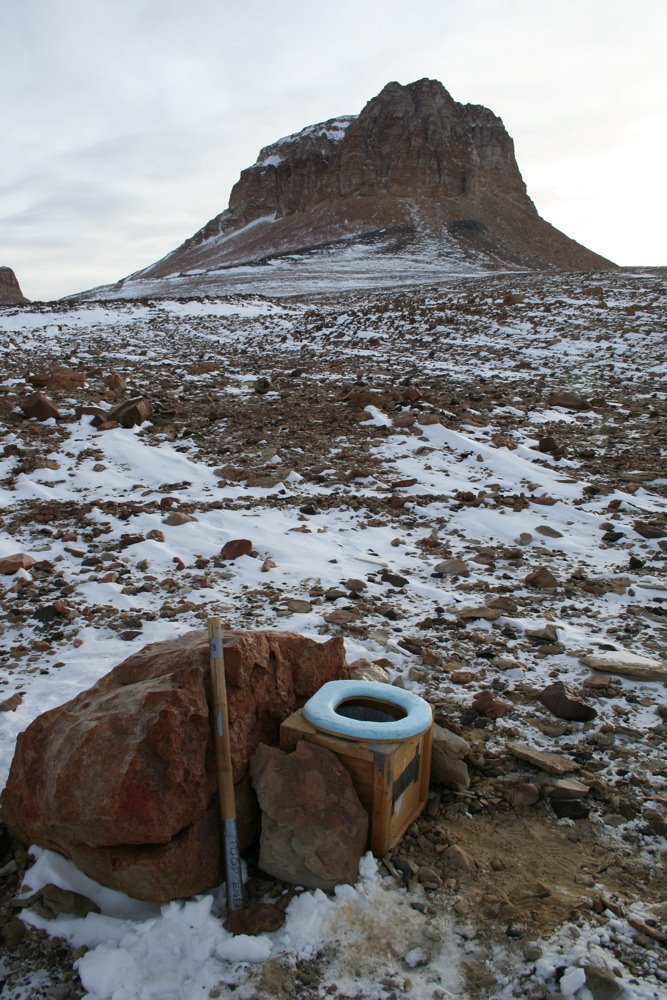
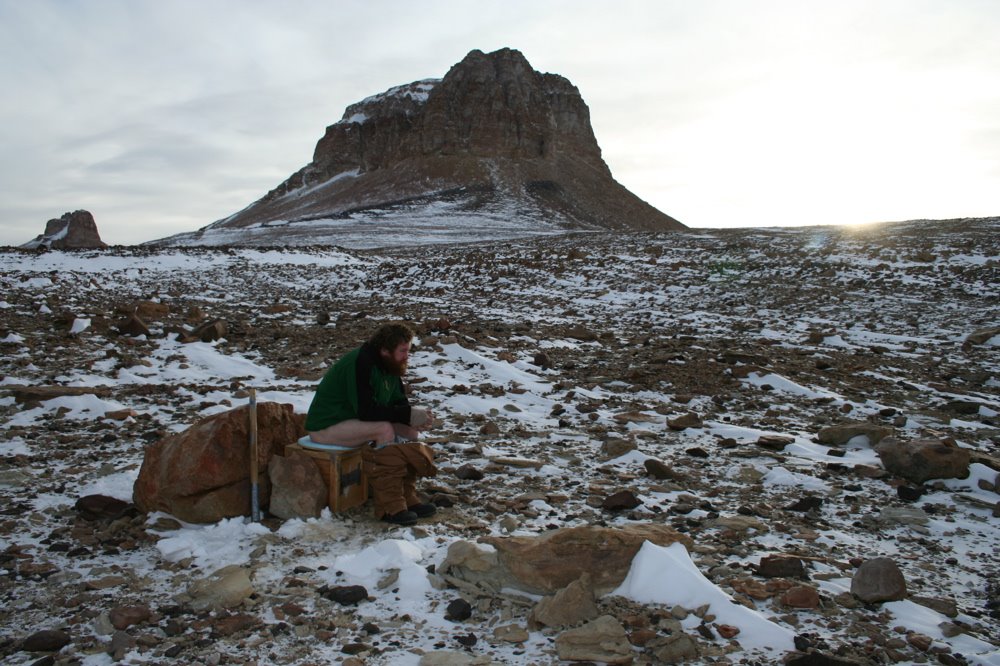
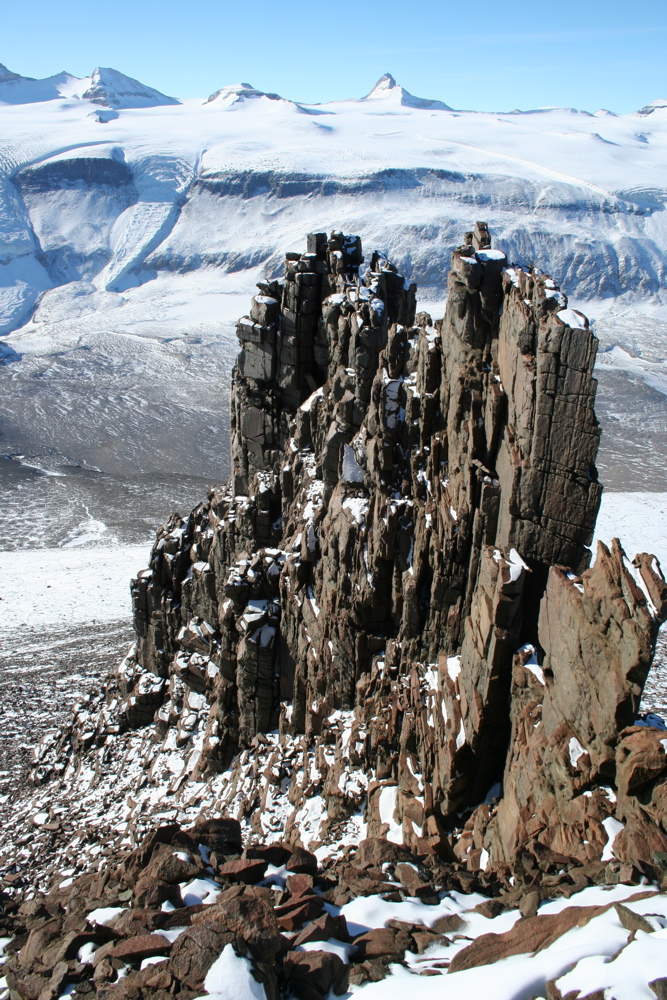
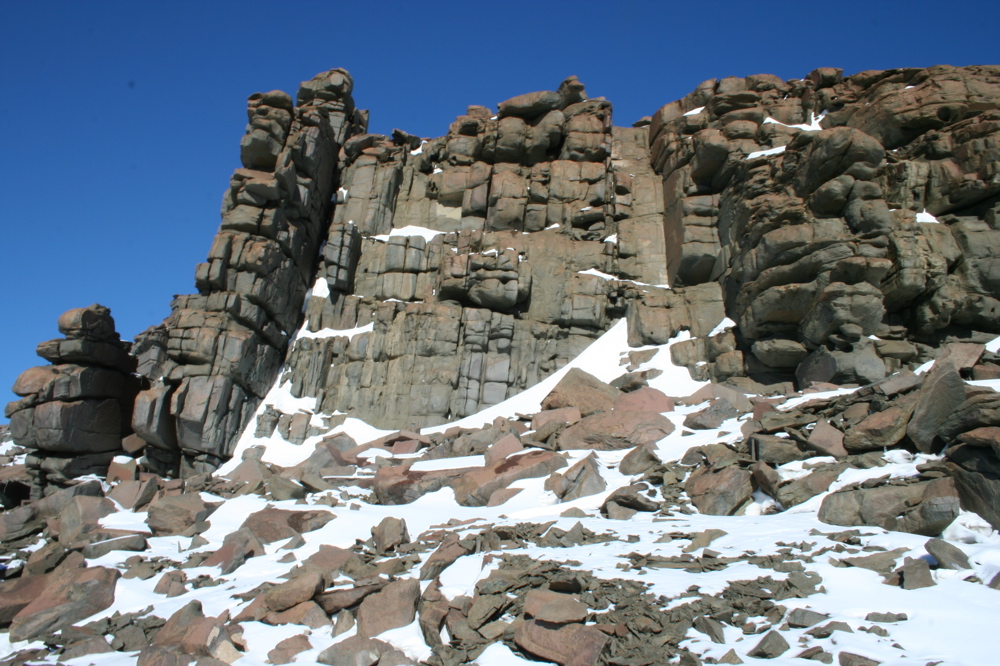
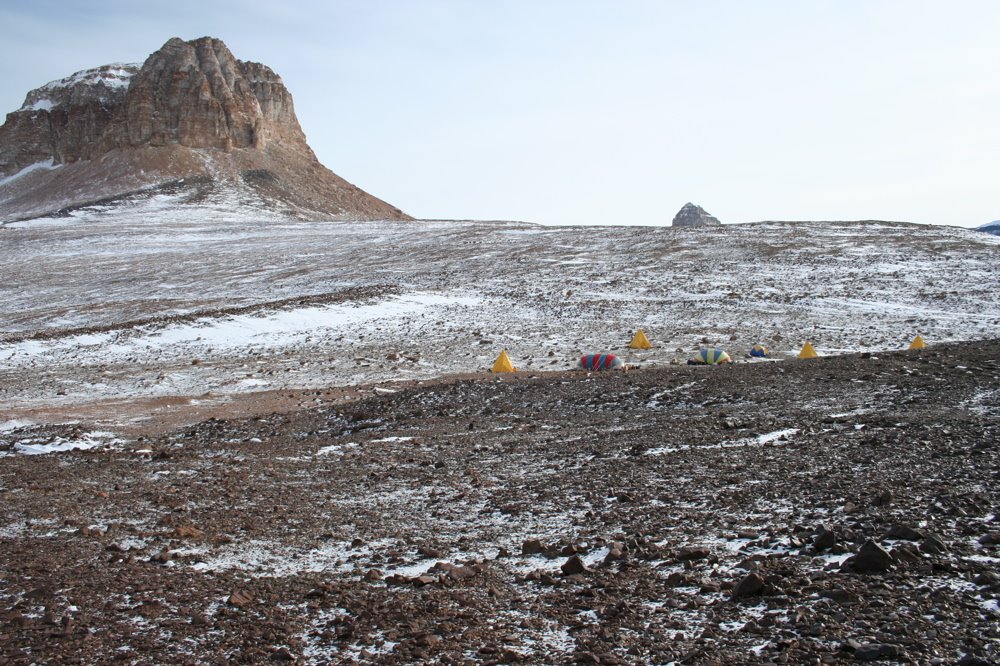
On first view our new digs are less spectacular than our spot at Mt. Boreas. Exciting news for any prospective tenants! But to enjoy the splendors of the Friis Hills requires nothing more than fifteen or twenty minutes walk to the edge of the flat-topped mountain we are camped on. We are set up in a broad bowl at the center of a boulder field, ringed by low hills, atop an Antarctica butte or mesa. It is a sort of island entirely surrounded by a wide moat of glacial ice. The boulders are weathered into every sort of anthropomorphic shape imaginable, as if Noguchi, Brancusi and Botero had collaborated on a vast sculpture garden of monstrous granite blobs. I'll try to send a series of pictures of the best ones.

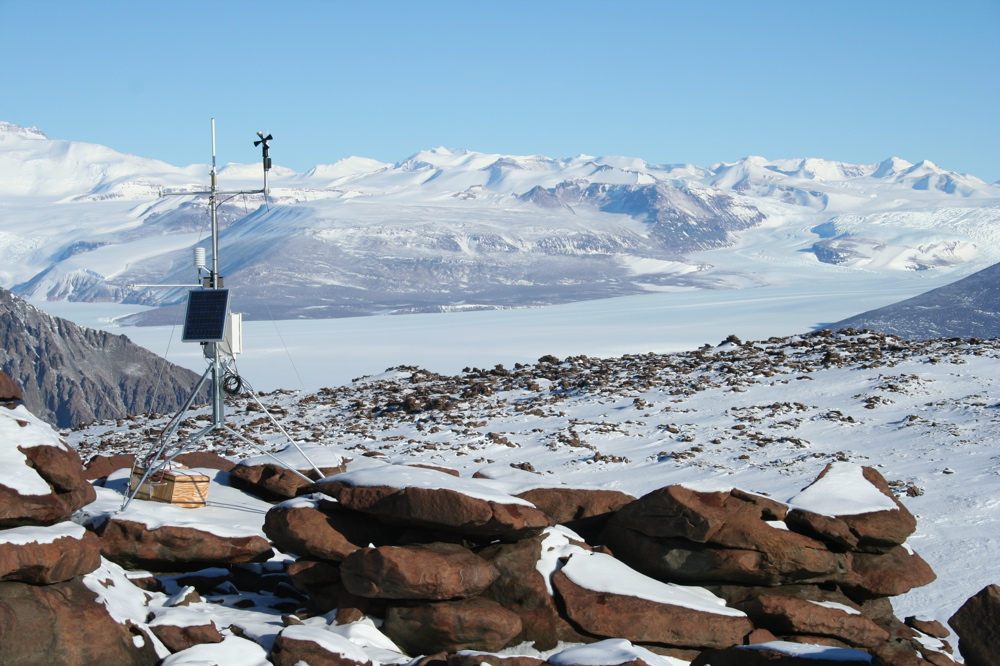
All around us steep dolorite cliffs, cracked and stacked like the Incan walls of Cuzco, plummet down to the vast ocean of glacial ice below us. Unless one is prepared to traverse the glaciers and risk their mighty crevasses there is literally no way out of here except by air. It is as if the seven of us are all alone in the world. At least so I thought until I went for a long hike, slogging my way up the tallest of the hills to the north-east of our camp. It was one of those wonderful walks where each hard-fought hundred meters of climbing earned yet more spectacular views. Finally, after finding one ridge after another ridge after another, I arrived at what I considered to be the top of the world. I scrambled up a boulder, only to see, just even with me on an adjacent rocky outcropping, an anemometer, complete with solar panel and two rock boxes filled with batteries, all mounted on a massive stainless steel tripod which some poor miserable beast had evidently carried up the same hill it took me two hours to ascend with nothing more weighty than a backpack full of big red parka and a couple of granola bars. There seemed to be no remotely suitable helicopter landing place within view, although I supposed one might have dropped the equipment from a sling. This rather crushed my sense of discovery and solitude but it put me in mind of the riggers, who have the coolest job in McMurdo, as long as you don't think too hard about the dangers of being forty feet up on an antenna tower on the top of Mt. Erebus when a sudden hurricane descends. If you see Andrew and Mikey from the rigger shack around town tell them I said hello and ask them when they are going to come out here and install our wireless internet service. If I'm not mistaken Mikey might even be the poor miserable beast just mentioned.

At this point I have pretty much finished devouring Douglas Mawson, as it were, but before putting "The Home of the Blizzard" down I discovered this fitting tribute to the riggers, which I was reminded of when I found to my shock and dismay that I was not the first soul ever to reach the top of the Friis Hills. "The erection of the wireless masts," wrote Mawson, "continued for some months during every favorable occasion. The first thing to do was to establish good anchorage. Then the oregon masts, section by section, were erected and securely stayed by stout steel-wire cables. This was a much more difficult piece of work than anyone in a genial climate is likely to imagine. Fumbling with bulky mitts, handling hammers and spanners, and manipulating knots and bolts with bare hands, while suspended in a boatswain's chair in the wind, the man up the mast had a difficult and miserable task."

We've just about finished charging up the camera batteries and will be turning off the generator soon, so that's all for now.

Gracias,
Rich

11/07/2006

"Douglas, don't eat me!"


In my ongoing effort to devour the literature of the great polar explorers of yore, I'm currently snuggling up with Sir Douglas Mawson's "The Home of the Blizzard" each night, at least for the small window of minutes between burrowing into the sleeping bag and the moment of extinguishing the stove, after which I promptly pull the drawstring tight over my head and hug the hot-water bottle as I slip into total sackage. As Sara Wheeler has it in her book "Terra Incognita," Mawson is the fourth of the "big four" antarctic explorers, and certainly the least known, after Scott, Shackleton, and Amundsen (this last coming in a shocking third in the fame stakes, despite being the one who actually made it to the south pole...). Mawson is lesser-known both because he was Australian and because he gave not a fig for the pole; his exploration of Adelie land had neither headline-grabbing goals nor results. Mawson studied rocks, and by complete coincidence I happen to be reading his exploits while camped with four hungry geologists.

Mawson and his posse were the first to winter in the glacier and crevasse-ridden Adelie land. Based on his account this region of Antarctica experiences one extended hurricane from late January until Halloween; in many months he records average wind speeds over fifty miles an hour over the course of the entire month. "A plunge into the writhing storm-whirl stamps upon the senses an indelible and awful impression seldom equalled in the whole gamut of natural experience. The world a void, grisly, fierce and appalling," he writes.

As soon as summer arrives Mawson divides his men into a half a dozen parties and they sledge out into the wilds in all directions in gale-force storms of thirty to forty miles per hour, winds they have come to think of as balmy breezes. "The Home of the Blizzard" so far fails to paint a strong picture of what the various parties were looking for, beyond passable routes to nowhere. They took many temperature readings, investigated black lumps protruding from the snow, found them generally to be mountains, noted the weather and the wind-speed, shot and skinned birds and suffered terribly.

Mawson's very own party of three had by far the worst of it. Theirs was the most ambitious, and the most southerly of routes. With twelve dogs he, Xavier Mertz and Lieutenant B. E. S. Ninnis dragged two sledges over endlessly white, treacherous terrain, bouncing and rolling over invisible sastrugi and plunging into crevasses. That the two massive glaciers lapping out onto the sea-ice to the east of the expedition's base camp are today named Mertz Glacier and Ninnis Glacier gives some idea of what was to pass.

Only a few days before reaching their projected outermost point, from which they were due to turn back in order to make a rendezvous deadline with all parties in mid-January, on a sunny and calm December 14th, Mertz led the group on skis, giving the dogs someone to chase after. Pausing, he held up his ski-stick (skiers at the time used only one pole) to indicate a possible danger zone. Just after, Mawson, passing the spot, noticed "the faint indication of a crevasse," but "it had no appearance of being in any way especially dangerous." Nonetheless he shouted back a warning as he continued across. Seconds later Ninnis, the six best dogs, the tent, and the bulk of the party's food disappeared without a sound. Because it was always the lead dogs of the first sledge that tended to fall into crevasses, there to dangle by their harnesses until rescued, all of the mission-critical equipment was relegated to the trailing sledge. Shocked, horrified and bereaved, Mertz and Mawson were also in grave danger; weeks out from camp without shelter or rations, their prospects were dim indeed. "When comrades tramp the road to anywhere through a lonely blizzard-ridden land in hunger, want and weariness the interests, ties and fates of each are interwoven in a wondrous fabric of friendship and affection," he wrote, of Ninnis' death. Even in the comparatively unperilous Antarctica of today such sentiment is not out of place; one McMurdoite after another told me of the strong bonds and sense of community they have found here amongst the small fraternity that shared, for instance, their winter-over.

One hundred and fifty feet below them, through a sledge-sized hole, Mawson and Mertz could see only one dog, its back broken, dying on an outcropping of ice. The crevasse continued, down into darkness. The men harnessed their remaining six scraggly dogs and made an about face. Dinner that night was made by boiling their empty food bags; the dogs were fed "worn out fur mitts, finnesko and several spare rawhide straps all of which they devoured." They had three hundred miles to travel, with no food depoted, as they had planned on making a loop and returning via a new route. First they ate George, a feeble dog. "Though some of the best meat was reserved for ourselves it was a very poor sample, chiefly sinews with a very undesirable taste." Next to go was Johnson. "He could never be accused of being a handsome dog, in fact he was generally disreputable and dirty, curiously enough these latter qualities seemed reflected even in the qualities of his meat, for it was permeated with a unique and unusually disagreeable flavor. This we subsequently referred to as 'Johnsonian.'" Then Mary, "a splendid dog, but we had to put an end to her at camping time...." Haldane was soon dispatched, followed by Pavlova, who had to be killed with a knife in "a revolting and depressing operation," as the duo had jettisoned their rifle in order to lighten the sledge. By Christmas, only two weeks after the deadly day, only one dog remained, and many, many miles. "It was certainly a cheerless Christmas," wrote Mawson. "I remember we wished ourselves happier anniversaries in the future, drinking the toast in dog soup."

By New Year's day Mertz had lost all appetite and on January 3rd he developed dysentery. Soon he was too sick to move. Mawson tended him on his deathbed, "cooking more meat and making appetizing broths." One wonders out of what. On the night of January 7th, after Mertz had had several delusional episodes, he died. "I stretched out my arm and found that my comrade was stiff in death," wrote Mawson.

It was not until January 29th that Mawson stumbled upon a bag of food cached by a search party, only to be trapped in an ice-cave by yet another blizzard, until February 8th, only five miles uphill from the base camp. We are not the first to wonder how it was that he survived the three weeks in the interim. At the very least anecdotal evidence suggests that Mertz may not have been buried intact in his sleeping bag in quite the way Mawson describes.

Aerial Textures


Dispatch from Mt. Boreas 06


November 2nd

Dear Deany,

Great minds think alike. The very morning after I had sent you our thoughts on being impersonated at the Halloween festivities your very welcome candy bars, note, and CD arrived on another helo flight, this one coming to take us out for an aerial photography session. Your observation that only those who have achieved a certain level of fame are so lampooned mirrored my pleasure at this celebration of our immortality. I can't thank you enough for the treats and also for your efforts in keeping antarcticiana, the blog, alive during my deep-field absence.

The flight which arrived yesterday was the first to bring visitors, the other two having brought only cargo, and it was quite amazing to see how quickly we have become de-socialized and also content and comfortable with our surroundings. Four scrubbed and healthy-looking GPS specialists disembarked to help our geology party get their mapping operation up and running. As they descended the hill from the dolorite helo-pad our first thoughts were "who are these strange, clean aliens, and what are they doing here?" Then they promptly whipped out cameras and began madly photographing our camp, which, as I have already observed, is indeed located in a picturesque spot at the base of Mt. Boreas. But by now it seemed strange that these strangers were wandering about amongst our tents taking photographs of our turf and home. It was a sort of invasion. I bristled, the way I might have upon emerging from my house on a springtime Sunday afternoon to find some accursed Brooklyn real-estate speculator taking pictures of my domain through the side window of his trolling SUV. As they departed half an hour later we huddled together with the geologists in solidarity and stood, all in a tight little bundle like sheep, blinking in the late evening sun, conversing long after the last echoing rotor-blade whirr had passed into the distance.

Geologist Adam Lewis pointed out that in the wake of the helicopter's visit we could once again see our breath as we exhaled into the cold air; the air here is so clean that it normally contains no condensation nuclei, the airborne particles which permit one's breath to be visible. I had noticed before that, no matter how low the temperature, my breath was always invisible here except inside the tents, but I had attributed this to, in some way I had not put my mind to understanding, relative humidity inside and outside the tents. In fact it is the gas exhaust from the Coleman stoves inside that makes the difference. Outdoors, outside the geologists' cooktent, It was a full five minutes before our exhales slowly dimmed away from cloudy, back to nothingness. We could not see the Mogas exhaust from the helo, even when it was taking off, but obviously even this one flyby released an extraordinary quantity of invisible pollutants into the air. More to the point, since in the northeastern United States I have never once had the experience of not seeing my breath on a cold wintery day, many of us spend almost all of our time living surrounded by an unsettling density of airborne toxins, no matter how clear the air looks.

You asked in your note whether we see the waning moon here. Today is the full moon, and as we approached it the waxing moon was lower and lower in the sky. In fact, at 9PM tonight, the full moon itself is not yet visible. It is probably behind Mt. Aeolus as I go to sleep. I suspect it may stay below the horizon for the entire time it is on the wane. If it is visible on the wane it will be in the middle of the night and only for the next few days, I think. I will try to keep an eye out and let you know as the week progresses. Coincidentally the day before your note arrived we were considering the moon and the sun, both visible, and Adam Lewis, who is turning out to be a font of interesting scientific trivia, and not just of the geological sort, illustrated how Antarctica and our eternal daytime demonstrate solar-lunar geometry much better than is ever possible back home. Again, something I had not thought of. Briefly, he explained that when the moon is full it is by definition and in actual fact to be seen in the sky in a position 180 degrees from the sun, which is to say at the other end of the sky. And similarly, when the moon is fractionally visible, the visible fraction is proportionate to the offset, in degrees, of the moon's position in the sky from the sun's. In other words when half of the moon is visible, its position, from where you stand at the center of a great circle, makes a ninety degree angle with the position of the sun. All entirely logical given that our position relative to the the two orbs is precisely what determines how much of the moon we can see illuminated. But only here andin the arctic is the relationship so easily visualized.

But enough science, lest we lose those readers only here for a quick, cheap laugh.

Best,
Rich
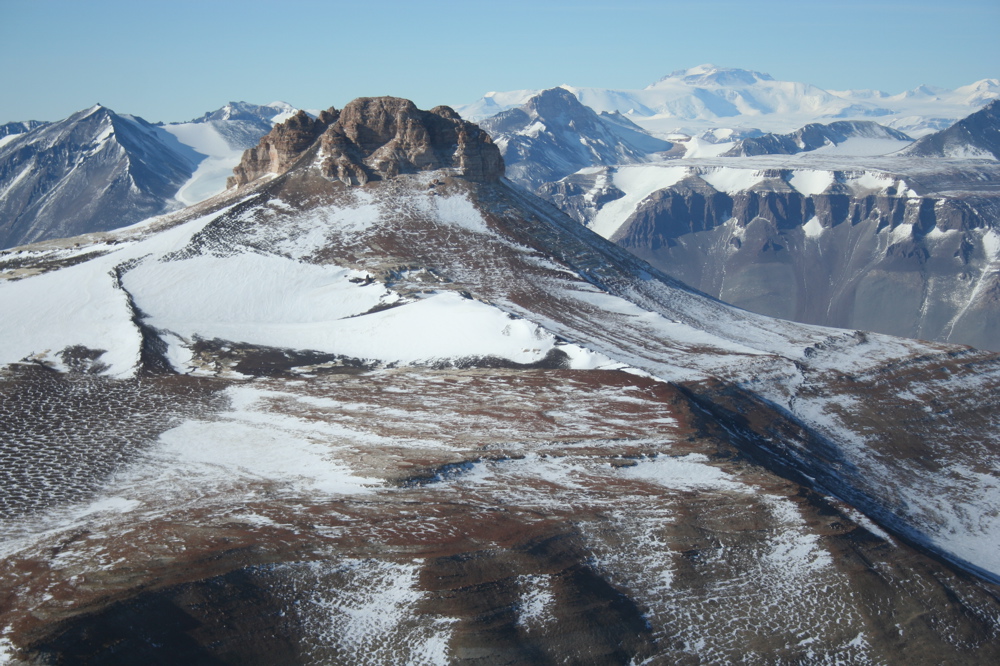
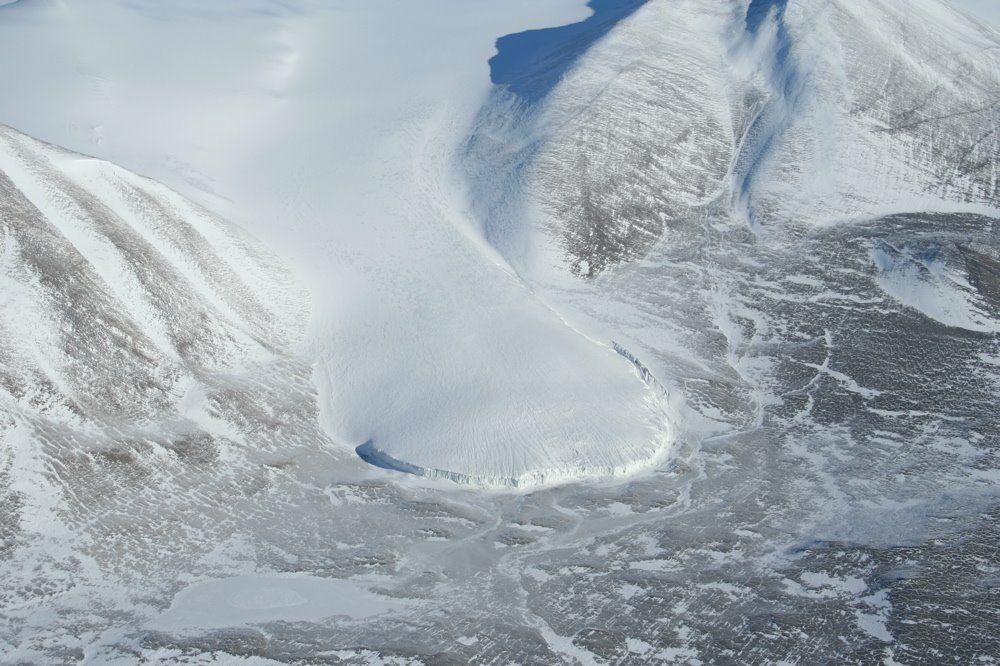
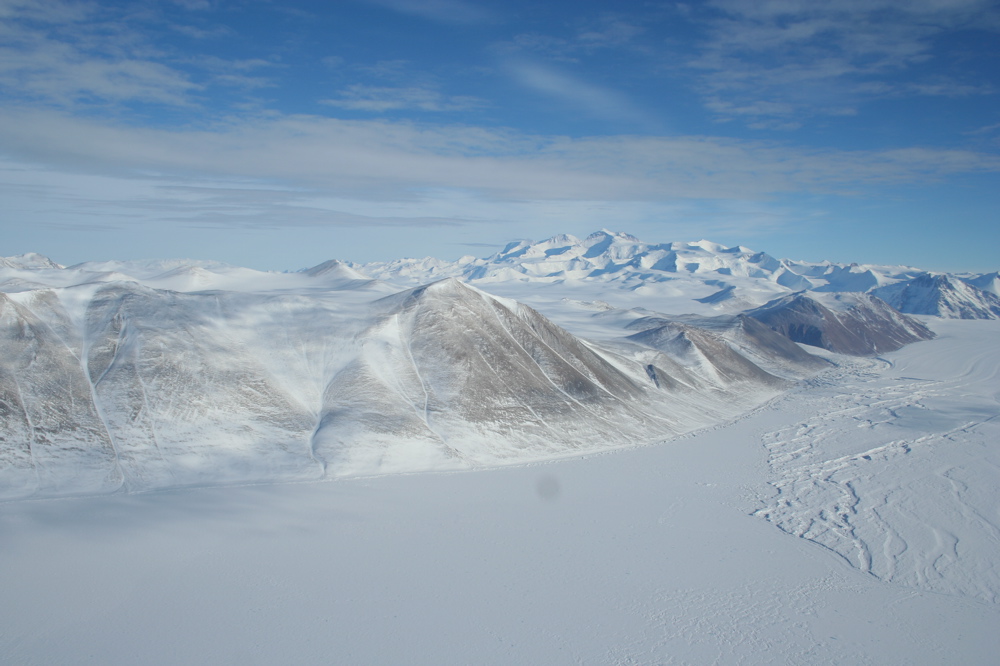
P.S. The images I've sent along are from our aerial photography session, when we flew a round trip down the McElvey valley and back and then around Mt. Boreas.

11/03/2006

Dispatch from Mt. Boreas 05


November 1st
Dear Deany:

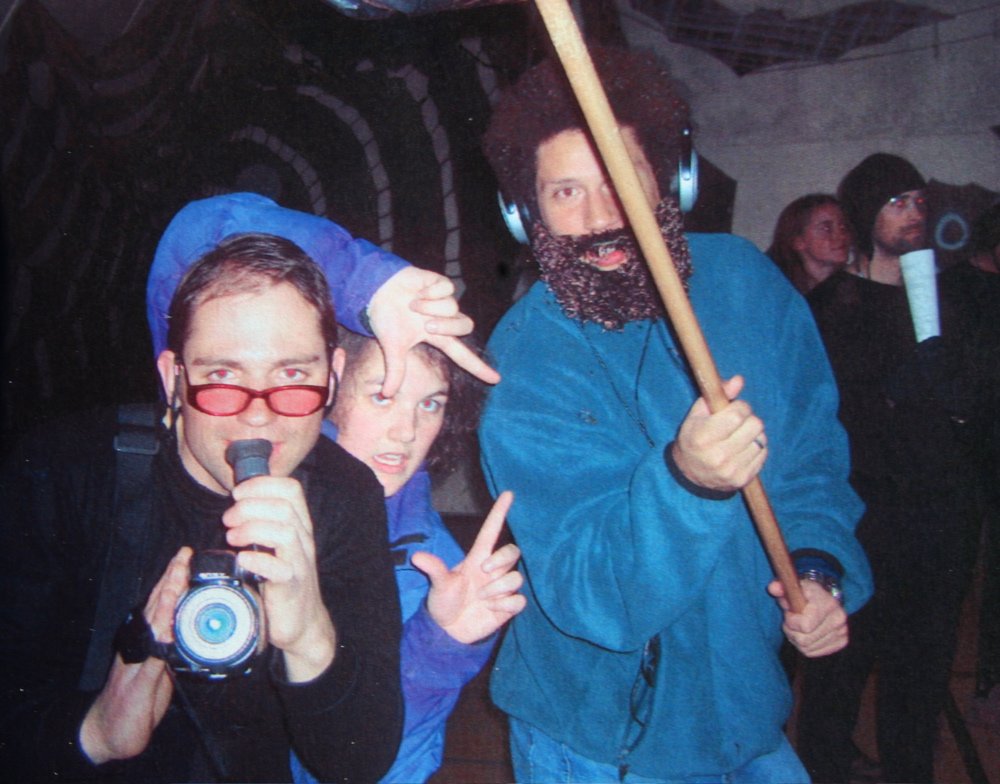
Along with a couple of empty urine barrels a helicopter dropoff yesterday included the excitement of a mail delivery all the way to our windswept mountain retreat. Eagerly awaited and forever to be appreciated were a tub of miso paste, some jasmine pearl tea and the most recent issue of the New Yorker, literary criticism and encouragement from Mac-Ops McMurdo, the latest edition of the "Antarctic Sun" newspaper and some color xeroxes of the notorious Halloween party you town-dwellers seem to make an annual event of, at which a trio of wags, perhaps starved for inspiration, appear to have taken advantage of our absence to impersonate our happy film crew. Pleased as we were to all be thus immortalized Sylvestre seemed slightly put out as his imitator, in his estimation, made him look "gay." Anne very much appreciated the genius Katie showed in destroying a pair of eyeglasses and hanging them around her neck on a rubber band. A true eye for the telling detail. For my part I need to warn you and the entire McMurdo community that I am certain, after careful analysis of the images, that the person wearing a false beard and carrying an inflated black plastic garbage bag on the end of a stick in a churlish effort to denigrate those of us in the sound-recording trade, is none other than wanted ice-terrorist Ali Fatah Morgana, living right in your midst. Show extreme caution when approaching this individual.

Dispatch from Mt. Boreas 04


October 31st
Dear Deany:

One hates to start two posts in a row with hackneyed observations, but after just over a week out here, as trite as it might sound, I must remark that our ability as humans to adapt really is remarkable. Yes, we live in tents and drink snow and consider four degrees F as the balmy tropical height of a sun-filled day, but things have achieved a certain normalcy. We have a routine going. We are eating well, and sleeping well. We film, we cook, we eat. All in subzero temperatures on this remote mountain saddle perched high above one of the dry valleys.

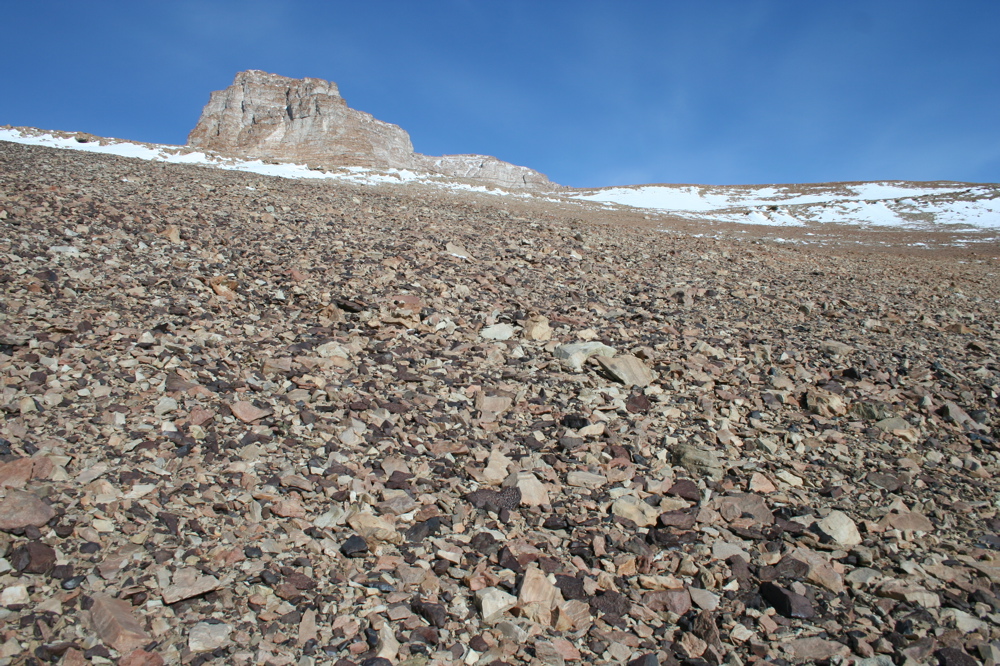
Between takes, as it were, I have even managed a couple of sublime hikes, one across a large empty depression presumably abandoned many millenia ago by one of the local glaciers, and a more ambitious walk yesterday when I descended to the floor of the McElvey valley, which stretches towards the sea some seven hundred meters below us. Walking west across rocky scree around the sort of apron of Mt. Boreas on which we are camped I found after an hour or so a channel, perhaps the path of some ancient glacial flow, sloping in comparative gentleness down to the valley before. It was nonetheless a toe-jamming descent requiring an hour of zig-zagging back and forth across an infinity of gravel.

I saw rocks. Many, many, rocks. Mt. Boreas has been shedding chunks of rock for millions of years, like dandruff. As I worked my way downhill I became convinced that our government spends so much time, effort and money in Antarctica largely in order to safeguard the Dry Valleys as a future fieldstone quarry, should this important natural resource one day grow scarce.

I saw rocks, small rocks, rocks perhaps the size of your fist, which have sat undisturbed and in the same orientation for thousands, hundreds of thousands, and perhaps millions of years. Never, or perhaps almost never, does any water flow here; there are no aqueous erosive processes of any kind. You may ask how it is that I know these small fist-sized rocks have not moved in all this time. You might ask why this would be interesting were it true. The answer to both your queries is the same; many of the rocks I saw were drilled full of minute holes and had the appearance of a chunk of swiss cheese, but only on the uppermost surface. Over the millennia endless grains of sand and grit drilled these holes with an inconceivable, insensate patience. After first catching in a tiny depression or hospitable corner of the rock, in a spot just friendly enough to entice, over thousands of years, more grains into swirling there than on the adjacent surfaces, blowing sand makes its mark, until the resulting excavatory activity becomes a self-fulfilling prophesy. A small tunnel fills with grit and the mouth of the hole invites more grains to the party, the whole swirling about like margaritas in a blender, accelerating the drilling. Imagine that countless grains of sand, blowing across a chunk of basalt, might require the entire length of recorded human history to make so much as the finest microscopic indentation on it and the mind boggles. Walking across such rocks, inevitably dislodging and disturbing some, one feels guilty of some monumental environmental crime; I understood Jainists and their refusal to so much as get out of bed lest in the process they crush to death some insignificant insect.

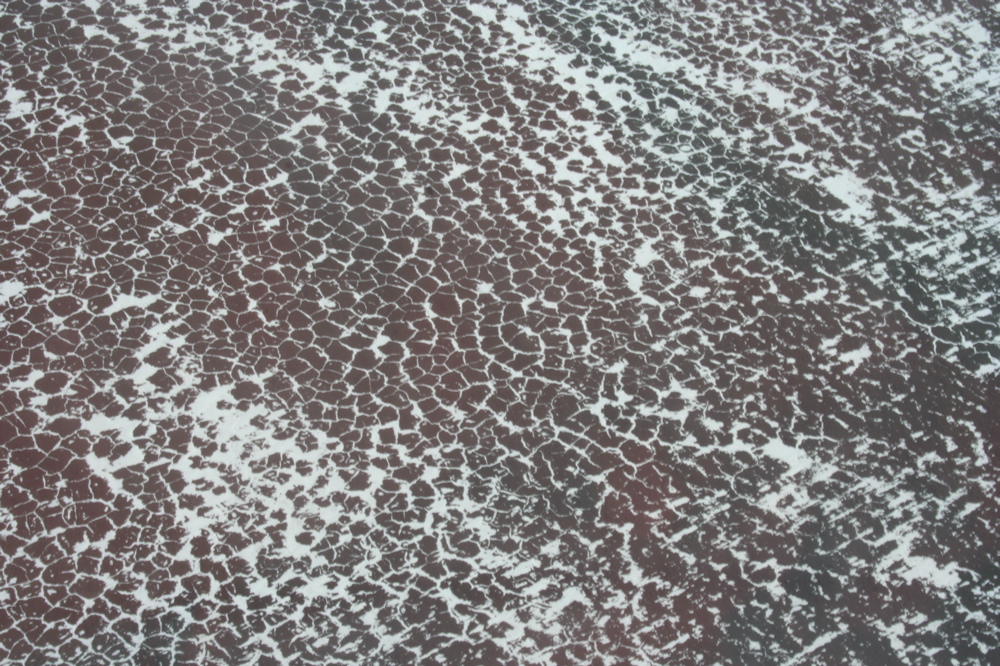
But enough focus on the minutiae; stretched out below me was the McElvey valley, subdivided into a panoramic vista of polygonal cracking, like a former pond drying in the African sun at the start of the dry season. Here the earth cracks in much larger polygons, presumably as the surface layer above the permafrost warms in the sun and shrinks. The cracks fill with snow, outlining their geometric shapes. Most are pentagons, some squarish, and others sextagonal; the bits of land pull on one another and subsurface frictions seem to determine the final shape. The polygons are generally fifteen to twenty feet across, and upon arriving at the bottom I walked over a large field of them. The cracks are ancient, and are not really crevasses. Filled with sand and blown gravel and topped with hard snow, they can safely be walked on.

I had expected the valley to slope gently down towards the Ross Sea, but in fact I found myself in a bowl-like depression in the midst of gentle undulations. The sun was strong. I sat on a boulder and ate gorp and thought how lovely it would be to have a cup of tea. It was then that I discovered I had forgotten to bring any teabags, and so i had to make do with a refreshing cup of hot water. Neither this minor disappointment, nor the mighty toil of the subsequent marathon spent climbing back up, up, and further up home to tent and stove, did anything in the least to diminish the wonderful experience of hours spent tramping across the stark and pristine landscape.

Cheers,
Rich
11/02/2006

Dispatch from Mt. Boreas 03


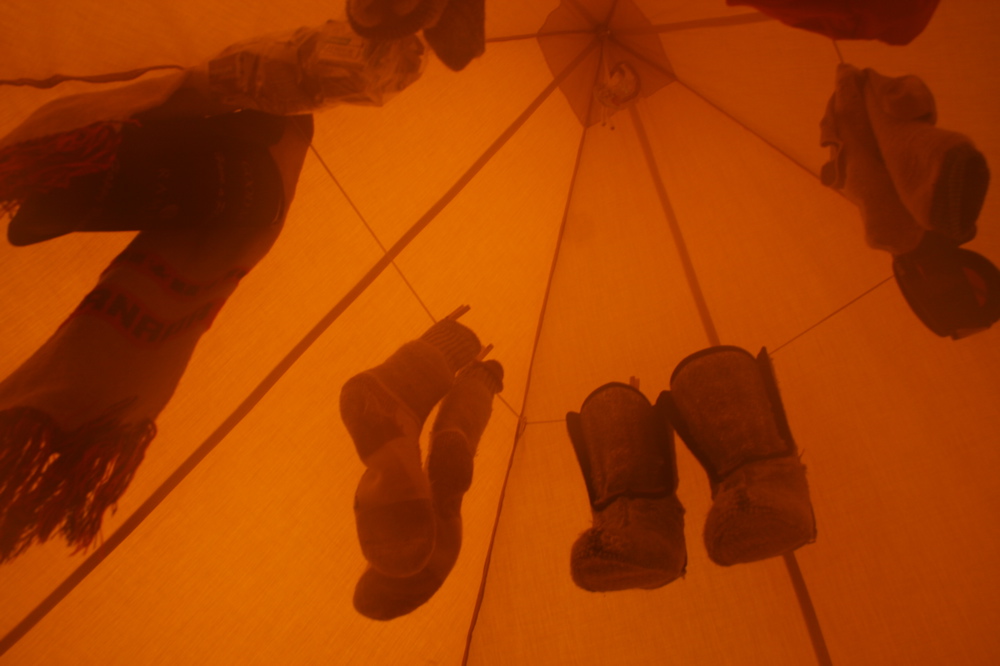
"Our hearth and home was the living-hut and its focus was the stove. Kitchen and stove were indissolubly linked, and beyond their pale was a wilderness of hanging clothes, boots, finnesko, mitts and what-not..."
--Douglas Mawson HOME OF THE BLIZZARD

October 29th:
Dear Deany

You know the old cliche, "be careful what you wish for." After spending the last two months in McMurdo ridiculing the idea that any romantic vision of Antarctic adventure lives on, given the contrasts between the comfortable modern lifestyle of MacTown and the inhuman sufferings experienced by the great Antarctic explorers of old, I now feel fully planted in my own survival adventure. And we have only been here for six days. The great trial, as I knew it would be, is how difficult it is almost never to be fully and truly warm. I say almost because after an hour or so of hiking uphill with the sound gear strapped to my back the other day my internal engine was burning properly and I was warm from fingertip to toenail. But this is not a level of activity that one can sustain for long. Inside the sleeping bag at night, after burning two Coleman burners in the center of my Scott tent for half and hour or so, one also feels almost humanly warm, but within seconds of extinguishing the burners to avoid asphyxiation when actually going to sleep, fingers of frigid air reach out to grasp one around the face and throat. I have never been a junkie, but I imagine my relationship to my Coleman stove already to approach the level of intimacy, panic, desire and concern of the addict's with his works.

We spend an extraordinary amount of time filling fuel bottles, melting snow, drinking tea, hanging socks above stoves, preparing to prepare to cook tomorrow's evening meal, and sitting around imagining being warm, until the day has utterly passed us by. It is difficult to imagine how much useful filming we will accomplish under such circumstances, although we have managed to capture a scene or two each day. Yesterday, for instance, we filmed the geologists digging a hole with a jackhammer. So far, to my astonishment, the sound gear has fired up each time without giving any problems, but the batteries are difficult to charge; a couple seem to have given up the ghost completely.

So far it has been almost windless, but the other night there were a few shifting gusts and Adam Lewis, one of the geologists we are camped with, opined that this augured the imminent arrival of the katabatic winds, which here at the foot of Mt. Boreas deliver fearsome doses of frozen air from the polar plateau. At speeds of very many knots. "Make sure when you go to bed you tie your boots and your Big Red parka to your cot," he said. The Scott tents have no floor, just a separate heavy tarpaulin unattached to the walls of the tent. "That way if the winds get really bad and your tent blows away, at least you still have your boots and coat." The image this conjured of myself, lying in a cot in the open air watching all of my worldly possessions blow away in a hurricane, was fearsome, but my tent is attached to a variety of eighteen inch steel tent stakes driven into the permafrost, has many guylines tied to boulders, and stands tall with several hundred pounds of rocks weighing down its external apron, so I thought his suggestion that it might blow away rather histrionic. However, upon turning in I experienced a sheepish moment when, having discounted the need to do so, I nonetheless found myself lashing the boot laces through an opening in the cot. I was reminded of the scene in Apocalypse Now when a fingee soldier climbs aboard a helicopter and asks the veterans why on earth they are all uncomfortably seated on the crowns of their helmets. "So we don't get our balls shot off," one of them says. At which point the fingee laughs at the silliness of it all. Moments later, the laughter having given out, he nervously removes his own helmet and slides it between his legs. However, no wind materialized that night, and my boots and teabags were safe.

Lying there I remembered also the horrifying episode in which Bowers, Wilson and Cherry-Garrard watched, from on their backs in their sleeping bags, as the tarpaulin roof of their shelter shredded to threads before their eyes, only hours after their own tent had been swept away in a blizzard. I apologize for not finishing off that saga before leaving McMurdo. I was rather miffed that I had not a single email from New York begging for the next installment, and rather let that thread slide. But to make a long story short, when that storm of one hundred odd years ago had subsided, Bowers, by some miracle, discovered their silk tent some quarter of a mile downwind, barely damaged. Without it we can be quite certain that the trio would have perished not far from the Emperor Penguin colony at Cape Crozier. As it was they barely limped back to Cape Evans, frostbitten and on the point of death.

Instead of contrasting the wireless internet, saunas, and abundant hot food of today's McMurdo with the bubbling seal blubber and frozen hard tack biscuits of the golden age of exploration, I finally compare my obsessions and experiences here at the edge of extremity, if not to the near-insane hardships of the Winter Journey, at least to the daily life and concerns of those men who first arrived here at the turn of the last century. Only forty-six days to go.

Yours,
Rich
10/28/2006

Dispatch from Mt. Boreas 02


October 25th:
Dear Deany

They got us pooping in barrels up here, my man. No terlet, nothin'. Happy to do it sitting on top of a plywood box or not, though, after forty-eight hours of total blockage. Runs in the family. Sorry to share that, but I've already realized a camping trip of this magnitude and extremity gets you all kinds of in touch with your bodily functions. Anyway, your cheeks get a bit cold, but the view from the box is spectacular. This is a totally dry camp we're running. We didn't bring any water in, and we aren't taking any out, and none goes on the ground, ever. All pee goes in the pee barrel. Spill your tea up here and it's like a glycol hemorrhage down in MacTown. Fly in the emergency tea-leaf removal squad, pronto.

What makes this little patch at the bottom of Mt. Boreas so geologically spectacular is that just behind a little glacial moraine up back of our camp lie the remnants of an ancient pond. Ancient, dude. Original, very old-school silt and sediment and layers of moss just lying out on the surface, or only inches below it. We're surrounded by undisturbed surfaces thirteen to fifteen million years old. The geologists we are with are scraping up thirteen million year old mosses from the lakebed. So we're trying to leave not so much as a moustache hair behind. I'm sure you agree it would be most embarrassing if in five hundred years or so some future generation of scientists were down here having a peek: "What you got?" "Oh, looks to me like some fourteen million year old single-celled organisms, fossilized, and some idiot's five hundred year old frozen earwax...."

I've had a cold, which is not much fun at twenty below, but the tents start to get liveable once you run a Coleman stove in them for awhile. You can't do that while you sleep, of course. Last night I lay down and wrote a fakesimile of Scott's final chronicles in my diary. "Sleepy, very, very sleepy,...time to... turn off the stove...." Even when awake one starts to feel a little oxygen deprived and loopy and has to remember to vent. Today I'm feeling much better and getting to that level of cold and lumpy cot-induced sleep deprivation where I know I will start to sleep well in my Scott tent.

Defrosted a couple of Speight's by dropping the frozen solid cans in a pot of boiling water. Left one just too long, only a few minutes, and therefore enjoyed hot beer with the feijoada dinner. (There would be a link here to some deep back-country Sao Paulo recipe, but I don't have the technology). I cooked kidney beans with Canadian bacon, Italian sweet sausage, and shredded peppered beef jerky and farofa-ed it off at the end with a box of cornmeal and it was about as good as if we had stopped on a Friday at a roadside cafe in the pantanal. So far it is pretty much iron-chef of the backcountry around here. Anne made pork loin with perfectly crisped rehydrated tomatoes and herbes de provence last night and I stepped up with the feijoada, shredding the chunks of jerky with such dedication that Sylvestre finally said "C'est un travail de moine, ce que tu fais la." (That's monk's work you're doing over there). He has to cook tomorrow and is pretty much running scared at this point. We're inviting one geologist over to dinner each night, from their tent all of twenty yards away, as a kind of getting to know you gesture (their idea, and a good one, they don't want to feel as if they are living amongst strangers). They generally cook stuff like pre-breaded deep fryable chicken patties and "chile con carne," so they are in awe of the culinary excesses going on over here at the writers and artists.

We're going to turn off the generator, get rid of the dieseling and go back to sublime, total, infinite and glorious silence (I am able to record usable dialog for film here from fifty yards, something unheard of almost anywhere else in the world). So that's all for now.

Yours,
Rich
10/27/2006

Dispatch From Mount Boreas 01


October 23rd:
Dear Deany,
The anticipation, the worry, the envisioning, the troubleshooting, and the preparation are all behind us as we have finally arrived at the foot of Mt. Boreas to begin our grotesquely long sojourn in the Antarctic wilderness. Fifty-two days. If stuff doesn't work, it's too late now, so why stress. It is spectacular here. Mt. Boreas looks something like a butte or a mesa and looms over us from the south-east. We are camped with four geologists on a narrow saddle between the steepest slopes of the mountain and a more gentle slide down to the valley floor to the north, a dry and frozen canyon that descends out onto the Ross Sea.

We took off from McMurdo around 3 pm. From the helicopter we could see open water towards the northern horizon, and I feel sure I can see just a patch of it, at the edge of the sea ice, from just up the hill from our camp here, at the "helo pad"-- a patch of rocks with the largest boulders removed. I haven't gotten out the binoculars to be sure. From the helicopter we had spectacular views of the Royal Society Mountains as we traced the western edge of McMurdo sound. Below us were many apparently enormous icebergs, like flat-topped merengues, entrapped in the ice. I imagine them to be mere sugarcubes compared to the bergs like B-15 that have kept McMurdo iced in for these last few years.

The geologists had flown out a few hours earlier than we, and when we arrived they had already set up their Endurance tent. The four of them, in big red parkas, were gathered and waving to us from the ground. Instead of the "hot-offload" we had been expecting, the pilot shut down the rotors and we piled our gear in a pile on a plain of shattered dark red basalt. Mt. Boreas is supposed to be a terribly windy place to camp, but it was calm and clear and cold, with beautiful blue skies. If it weren't for the patches of snow and tongues of glacial ice licking their way down between distant mountain clefts I would have sworn I was somewhere in the southwestern United States. We got our own Endurance tent up easily enough, fired up a Coleman stove and started melting snow to make tea while waiting for the helicopter to come back with more Scott tents, camera equipment and the bulk of our food, all packed into plywood rock boxes which the geologists will use for transporting samples after we have devoured all the grub in them. Which reminds me I haven't opened the rock box with all my beers in it yet, and I better go do that; I'm sure they are all frozen solid by now. I know this blogging thing is important, but camping is all about priorities. More Later.

Cheers,
Rich
10/22/2006

We're Outta Here...

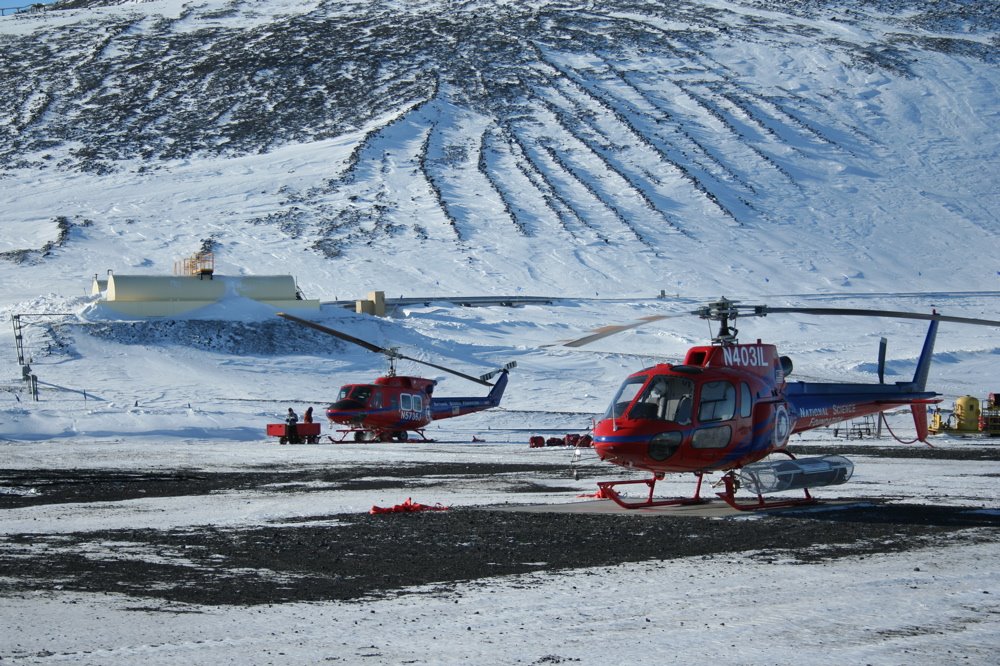
Weather perfect for flying helicopters today, crisp, clear, light breeze, sparse distribution of little puffy clouds. Off we go, up into the air, behind Ob Hill, over Scott Base, and wheeling off across the Ross Sea to the Olympus Range. I'm going to be hauling rocks and setting up tents until far into the night.


Ready for Liftoff


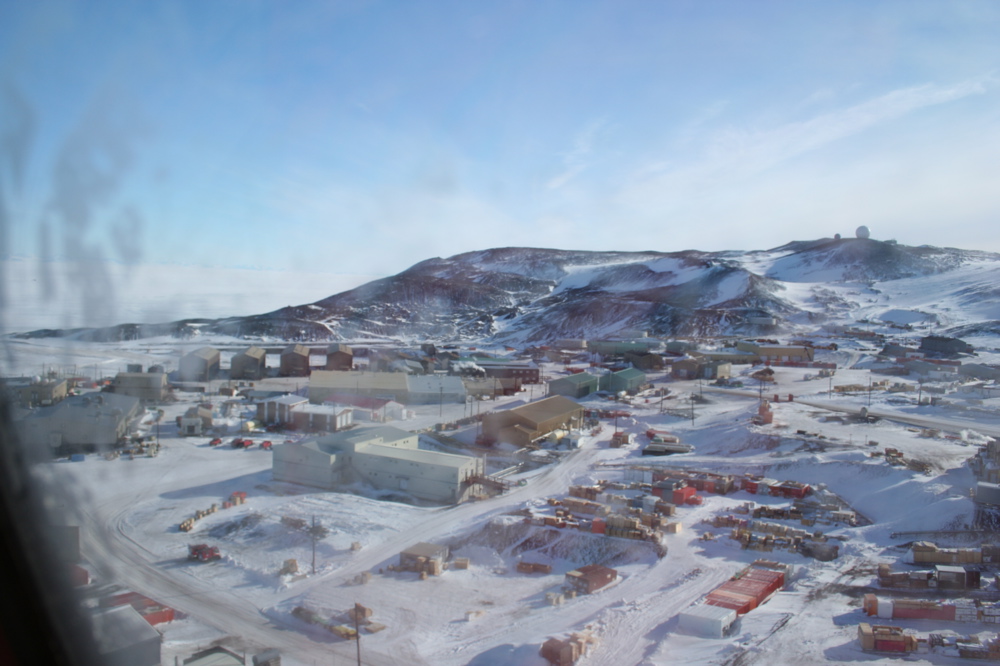
Antarctica's largest urban agglomeration, the McMurdo megalopolis, from the air

Flying over Scott Base, capital of the Ross Dependency, sovereign New Zealand territory and home of Ross Island's most comfortable pub


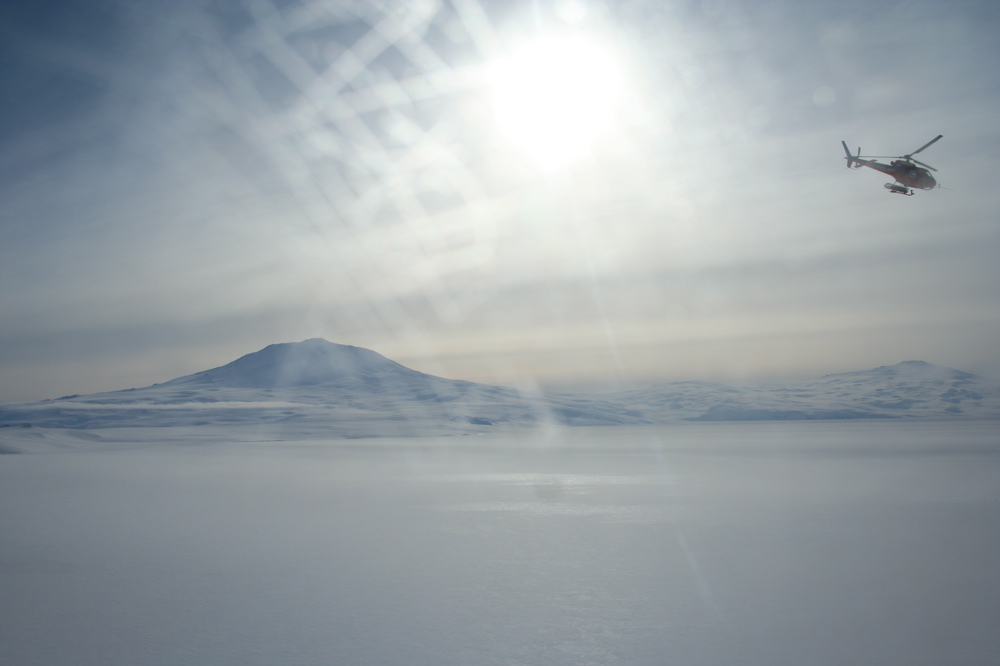
Erebus in the background as we turn to the north...

Au Revoir, not Adieu

We are on the eve of our departure for the next leg of our Antarctic marathon. Tomorrow afternoon, weather permitting, Sylvestre and Anne and I will pack into a helicopter and fly over the frozen Ross Sea to the mainland to set up camp in a high mountain valley with four geologists from Fargo. They run, far too many people have told me, by far the most minimalist, sparse and rugged camp of any of the teams who head out into the field. We are taking with us only two tiny generators to recharge our sound and camera batteries, which we will run as infrequently as possible. The only devices we will have that generate heat are four standard Coleman stoves.

Hasta la vista! (Obligatory Generic view of Frosty Landscape)

Perhaps because of the late-season persistence of the polar vortex, a swirling stratospheric typhoon of negative 80 degree air whirling about somewhere above us, temperatures this October have been fifteen degress colder than average. Subtract another ten to twelve degrees to account for the altitude at which we will camp and things are starting to sound quite chilly.

Most camps, far too many people have seen fit to mention to me, have diesel burning Preway Stoves and Jamesways, which are essentially quonset huts made from ballistic canvas. Some have wireless internet, a full-time cook and, for all I know, free massage therapy and spa treatments in the afternoons. We won't have any of that sort of absurd luxury. But the communications-challenged environment sadly means that there may be few, if any, new posts to antarcticiana over the next fifty-two days. I have been informed by Andrew Podoll that I may be able to get the occasional text-only entry up via satphone email. Failing that my man Deany is on standby to assist with some limited data flow, so don't give up us on altogether....

10/21/2006

Diggin' in the Crates

Do you have any Incredible Bongo Band?

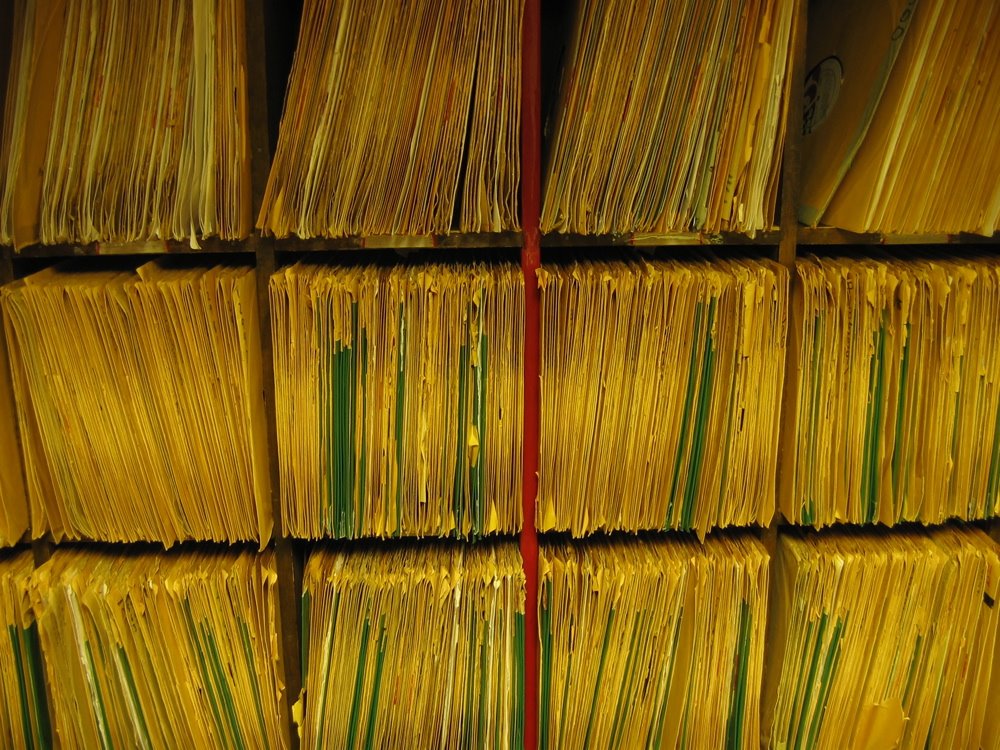
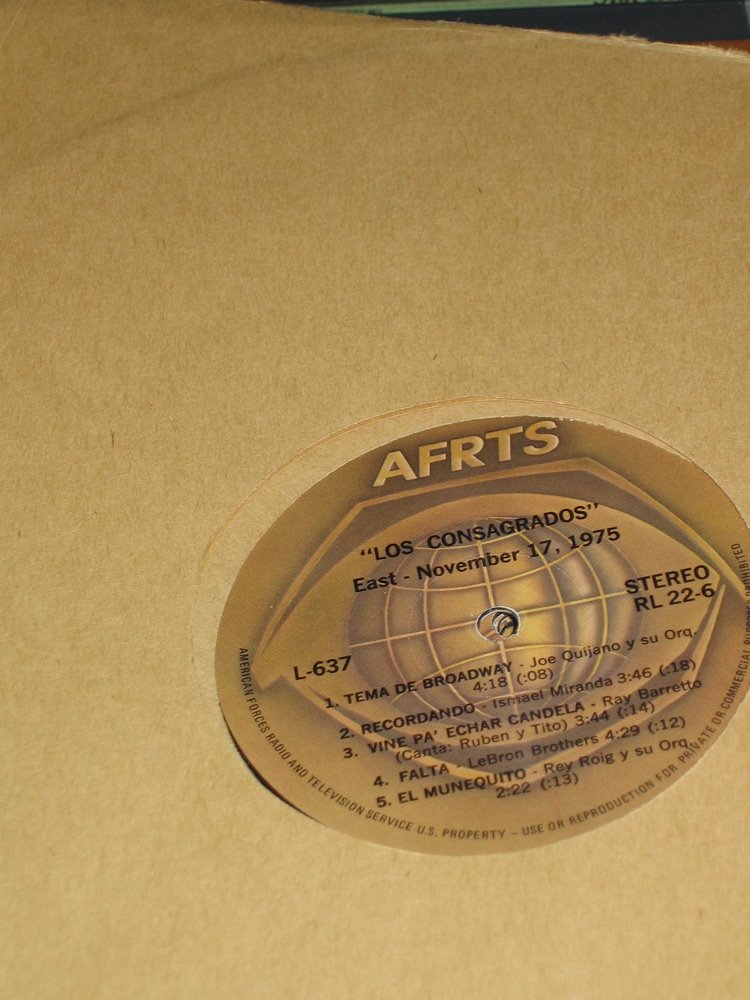
According to superdeejay Georg Bakker of the McMurdo airwaves, the Armed Forces Radio Network vinyl archive, locked up in a big closet just down the hall from the radio station, is the last of its kind anywhere in the world. Georg heard some of donflan's latin stylings on the killer ipod at a little going away soiree we threw last night and urged me to come over to the radio station and check out the collection.

Working what may be the only two turntables on the entire continent...

I was picturing a dusty vault full of pristine superrare James Brown productions and trying not to slobber on myself in anticipation, so after brunch today I hurried over to find Georg behind the wheels of steel, transmitting a powerful mix of classic era Fania to the MacTown massive. It looked a lot like the room I first deejayed in at WPRB, when I was at college. "Like a kind of a time capsule," Georg said.

I bet none of the rest of you dusty-fingered beat freaks have gone crate-digging in Antarctica!

He showed me the vinyl, which used to arrive via subscription from the armed forces, and was arranged by genre. They have several hundred latin records in paper sleeves, each with a collection of mexican hits on one side and primo New York salsa on the other, all compiled and furnished by someone who had a great job working for the Pentagon in the 1970s.

Every record is a sort of 'greatest hits' for a particular month...

Imagine joining the marines or the army or whatever and your job turns out to be choosing what hot music to ship off to military bases across the globe. Apparently everywhere else in the world but McMurdo these vinyl collections have long since been jettisoned. I pulled some Harlow, Orchestra Broadway, Jonny Ventura, Ismael Rivera, and if you don't know, now you know. Georg and I took turns deejaying. I have no idea if anyone was listening, but it was, shall we say, fat.

(Update: About an hour after I left, Georg gave me a call to say that the phones at the radio station were ringing off the hook and folks were even checking in with requests. Too bad I'm moving to a freezing cold slab of rock at the foot of Mt. Boreas tomorrow or we could really get something going.)